


The Ultimate Guide to Eco-Friendly Beach Dresses
Why Should Your Next Beach Dress Be Eco-Friendly?
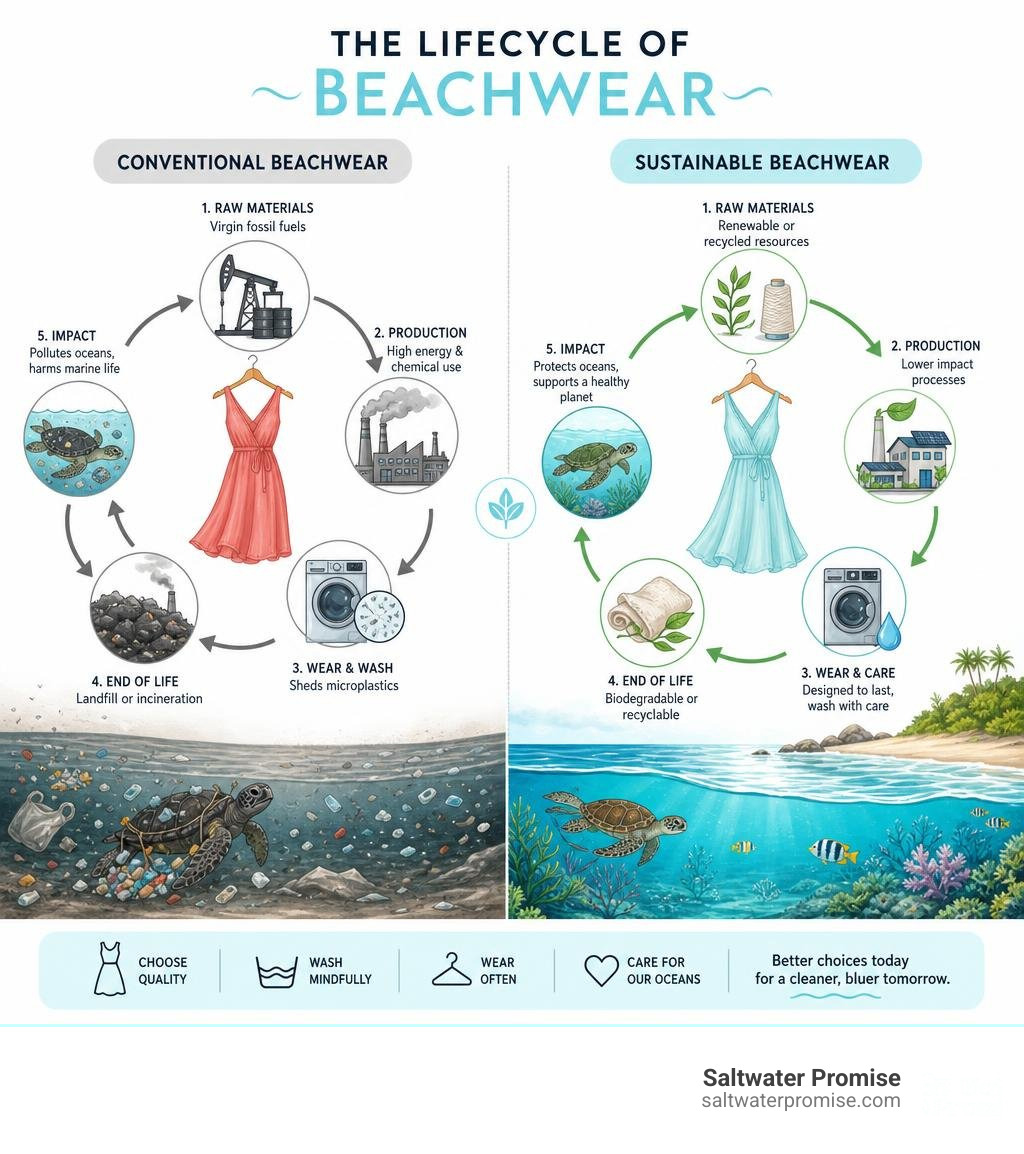
When we pack for a coastal getaway, we often look for pieces that embody the carefree, sun-drenched spirit of the shoreline. However, the traditional resortwear industry hides a dark secret: much of the vacation-centric clothing sold on the mass market is designed to last for only a single vacation. This “wear-it-once” fast-fashion mentality comes with a devastating environmental price tag.
Conventional beach dresses are frequently made from cheap, synthetic fabrics like virgin polyester, nylon, and acrylic. These petroleum-based textiles are not biodegradable and require immense amounts of energy and chemicals to produce. Every time a conventional synthetic dress is washed–or even worn while wading through the surf–it sheds thousands of tiny plastic particles. These microplastics bypass filtration systems and flow directly into our oceans, where they are ingested by marine life and disrupt fragile aquatic ecosystems. In fact, synthetic textiles are one of the primary sources of primary microplastics in our waters. For more background, the NOAA Marine Debris Program explains how microplastics enter and persist in aquatic environments.
As we navigate July 2026, a powerful shift is happening. Conscious travelers are demanding better, sparking a rise in sustainable resortwear that proves we do not have to sacrifice style for sustainability. Choosing Ocean-Friendly Clothing is a simple yet impactful way to protect the marine environments we love. By opting for garments made with the planet in mind, we actively reduce waste, conserve water, and keep harmful chemicals out of our waterways.
At Salt Water Promise, our mission is to blend effortless coastal style with a deep commitment to conservation. We believe that the clothing we wear on the beach should respect the beach. Our designs are inspired by the natural rhythms of the sea, crafted to move seamlessly from shoreline adventures to laid-back coastal living, while carrying a message of preservation.
What Materials and Certifications Define a Truly Sustainable Beach Dress?
Understanding the labels is the first step toward building an eco-conscious beach wardrobe. When shopping for sustainable beach dresses, we generally choose between two categories of responsible materials: natural, biodegradable fibers and high-quality recycled synthetics.
Natural Biodegradable Fibers
Natural fibers are highly breathable, comfortable in intense heat, and naturally break down at the end of their lifecycle without leaving plastic residue behind.
- Organic Cotton and Regenerative Organic Certified® (ROC) Cotton: Unlike conventional cotton, which is notorious for its heavy pesticide and water usage, organic cotton is grown without chemical fertilizers or toxic pesticides. Taking it a step further, Regenerative Organic Certified® (ROC) cotton comes from farms that actively work to rehabilitate the soil, respect animal welfare, and improve the lives of farmers. It is incredibly soft, breathable, and perfect for dry beach wear.
- Organic Linen and Hemp: Derived from the flax and cannabis plants respectively, linen and hemp are the ultimate hot-weather fabrics. They require minimal water and pesticides to grow, are naturally hypoallergenic, and get softer with every wash. Their hollow fibers offer unparalleled breathability, keeping you cool even on the most humid coastlines.
- TENCEL™ Lyocell and Eco Rayon: These cellulosic fibers are made from wood pulp harvested from sustainably managed forests. What makes TENCEL™ Lyocell a gold standard is its closed-loop manufacturing process, which recovers and reuses 99% of the water and non-toxic organic solvents used to break down the wood fibers. Similarly, Eco Rayon offers a fluid, lightweight drape with a significantly lower environmental footprint than conventional rayon.
Recycled Synthetics and Innovative Bio-Synthetics
For active beachwear that requires stretch, durability, and quick-drying capabilities, recycled synthetics help divert waste from our ecosystems.
- ECONYL® Regenerated Nylon: Abandoned fishing nets and ghost gear account for nearly 10% of ocean pollution, floating endlessly and trapping marine life. ECONYL® harvests these discarded nets, along with other nylon waste, and regenerates them into high-quality, infinitely recyclable nylon fabric. This process reduces the global warming impact of nylon by up to 90% compared to material from oil.
- Repreve® Recycled Polyester: Made from recycled plastic bottles, Repreve® gives a second life to post-consumer waste, preventing plastic from ending up in landfills or our oceans while maintaining excellent durability and stretch.
- EVO by Fulgar®: An exciting development in the textile space, EVO is a biobased polyamide made entirely from castor seeds. It is a renewable, plastic-free alternative to traditional nylon that offers a soft, cotton-like feel while maintaining high-performance stretch and quick-drying properties.
To read more about how these fabrics are changing the industry, check out The Recycled Material Fashion Revolution.
How to Spot Greenwashing: Look for the Certifications
With so many brands claiming to be “green” or “eco-friendly,” third-party certifications are essential to verify these claims. When shopping for beachwear and Sustainable Swimwear Women Actually Want to Wear, look for these trusted labels:
- GOTS (Global Organic Textile Standard): The gold standard for organic fibers, ensuring the material was grown without chemicals and processed under strict environmental and social criteria.
- OEKO-TEX® Standard 100: Guarantees that every component of the garment—from the fabric to the threads and buttons—has been tested for harmful substances and is safe for human health. This is particularly important because our skin is our body’s largest organ, and when we sweat in the sun, we can absorb toxic dyes (like azobenzene disperse dyes), PFAS, or BPA commonly found in conventional synthetic clothing.
- GRS (Global Recycled Standard): Verifies the recycled content of the material and tracks it from the source to the final product, while also ensuring responsible social and environmental practices during processing.
- Fair Trade Certified: Ensures that the physical garments were sewn in factories where workers are paid fair wages, work in safe conditions, and receive community development funds.
How Do You Choose a Beach Dress That Is Both Fashionable and Practical?
A truly sustainable wardrobe is built on versatility. The most eco-friendly garment is the one you wear repeatedly, which means your beach dress needs to perform beautifully across multiple settings. When selecting a style, look for pieces that transition effortlessly from a morning shoreline walk to an afternoon lunch or an evening seaside dinner.
Key Design Features to Look For
- Built-in Pockets: A practical beach dress should always have pockets—perfect for holding seashells, your keys, or a tube of reef-safe sunscreen.
- Adjustable Straps and Multi-Way Styling: Look for dresses with tie straps, wrap-around belts, or button-down fronts. A versatile shirt dress, for instance, can be worn completely open over a swimsuit as a breezy cover-up, belted as a structured midi dress for dinner, or paired loose with trousers for a casual day of exploring.
- Travel-Friendly Textures: Packing light is key to reducing our travel carbon footprint. Materials like double-layered cotton gauze or crinkled cotton are naturally textured and designed to look beautiful with a relaxed, slightly wrinkled finish. This eliminates the need for ironing, making them the ultimate low-maintenance travel companions.
- Central Pleats and Generous Drapes: Some of our favorite beach gowns feature a central pleat in the back. While this design looks full and voluminous on a hanger, it drapes elegantly and less voluminously on the body, allowing for maximum airflow and comfort in hot weather while maintaining a flattering silhouette.
Sizing and Fit Tips to Reduce Return Emissions
Online shopping returns generate massive amounts of transportation emissions and packaging waste. To shop mindfully, always check the brand’s specific garment measurement charts rather than relying on generic size guides. If you are looking for a relaxed, flowy fit, consider sizing down if the measurements allow, or opt for adjustable wrap designs that naturally accommodate changing bodies.
For more styling inspiration, explore our guides:
- From Maxi to Mini: The Ultimate Guide to Beach Chic Dresses
- Wave Hello to Style: Your Essential Guide to Ladies Beach Dresses
- From Flowy Maxis to Cute Cover-Ups: How to Find Your Perfect Beach Dress Online
Where Can You Buy High-Quality, Comfortable, and Sustainable Beach Dresses?
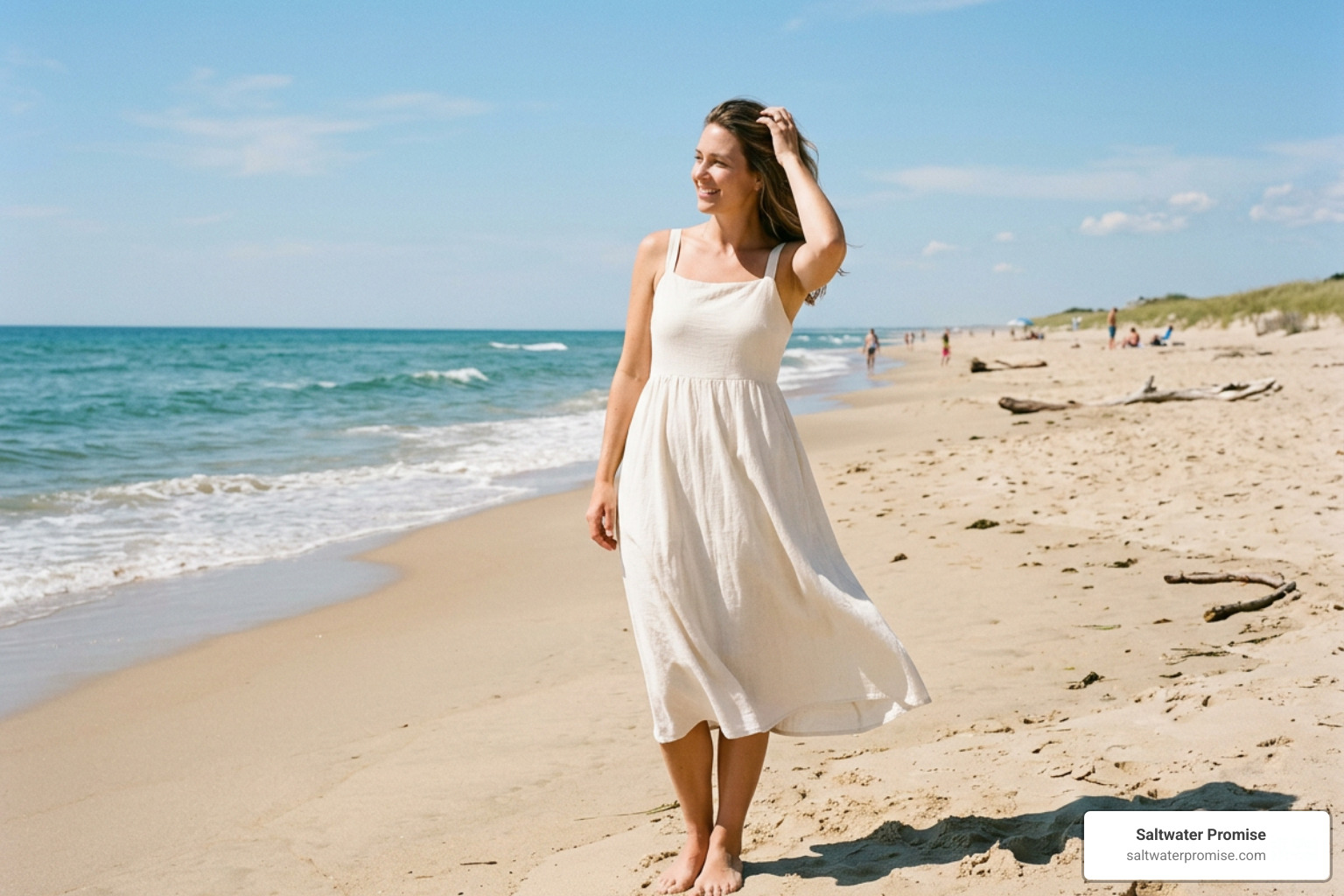
Finding high-quality, eco-conscious resortwear has never been easier. Today, several business models allow you to align your purchases with your environmental values.
Direct-to-Consumer (DTC) Transparency
Many modern sustainable brands utilize a direct-to-consumer model. By partnering directly with ethical factories and shipping straight to consumers, these brands eliminate traditional retail markups and middleman costs. This allows them to offer luxury-quality organic cotton, linen, and recycled garments at highly accessible price points—often saving consumers up to 64% compared to traditional retail.
Supporting Artisan-Made and Local Production
Another beautiful pathway to sustainability is supporting artisan-made resortwear. Many independent brands partner with local weaving studios and traditional artisans in tropical regions, preserving generational techniques like hand-block printing or using 16th-century pedal looms. These small-batch, slow-fashion runs prevent overproduction waste and provide stable, fair-wage jobs to local communities.
By choosing ethically crafted garments that feature hand-designed patterns and traditional craftsmanship, you can enjoy unique, high-quality pieces that carry a rich cultural story. For instance, lightweight organic cotton dresses crafted by production partners using traditional methods offer unparalleled comfort and a beautiful drape for all-day shoreline wear.
Choosing American-made or locally produced clothing also significantly reduces your carbon footprint by cutting down on the “fashion miles” associated with international shipping.
Salt Water Promise: Effortless Coastal Style with a Purpose
At Salt Water Promise, we design our coastal apparel to be the perfect blend of comfort, versatility, and environmental stewardship. Whether you are searching for a lightweight organic cotton gauze cover-up or a flowing linen dress for sunset walks, our pieces are crafted to celebrate the sea while protecting it. We prioritize natural, biodegradable, and recycled fabrics, ensuring that our impact on the planet is as gentle as a summer breeze.
To help you decide which material is right for your next coastal getaway, we’ve put together this quick comparison table:
| Fabric Type | Best For | Key Environmental Benefit | Care Level |
|---|---|---|---|
| Organic Cotton / Linen | Dry beach wear, lounging, dining, hot and humid climates | 100% biodegradable, pesticide-free, low water footprint | Easy (machine or hand wash, air dry) |
| TENCEL™ / Eco Rayon | Elegant resort wear, evening dinners, breezy city touring | Closed-loop processing, sustainably managed wood pulp | Gentle (hand wash or delicate cycle, shade dry) |
| ECONYL® / Repreve® | Active beachwear, swimming, water sports, wet cover-ups | Diverts ocean plastic and ghost nets, infinitely recyclable | Easy (cool wash, use a microplastic wash bag) |
For more tips on building your vacation wardrobe, check out our Travel in Style: Eco-Friendly Resort Wear for Your Next Getaway and our comprehensive Ultimate Guide Women Beach Clothing 2026. Ready to find your next favorite piece? Visit our Shop to explore our latest collections.
How Do You Care for Sustainable Resortwear to Make It Last?
The journey to sustainability doesn’t end when you purchase a garment. How we care for our clothes accounts for a significant portion of their lifetime environmental impact. By adopting eco-friendly laundry habits, we can extend the life of our favorite beach dresses and minimize our carbon and water footprints.
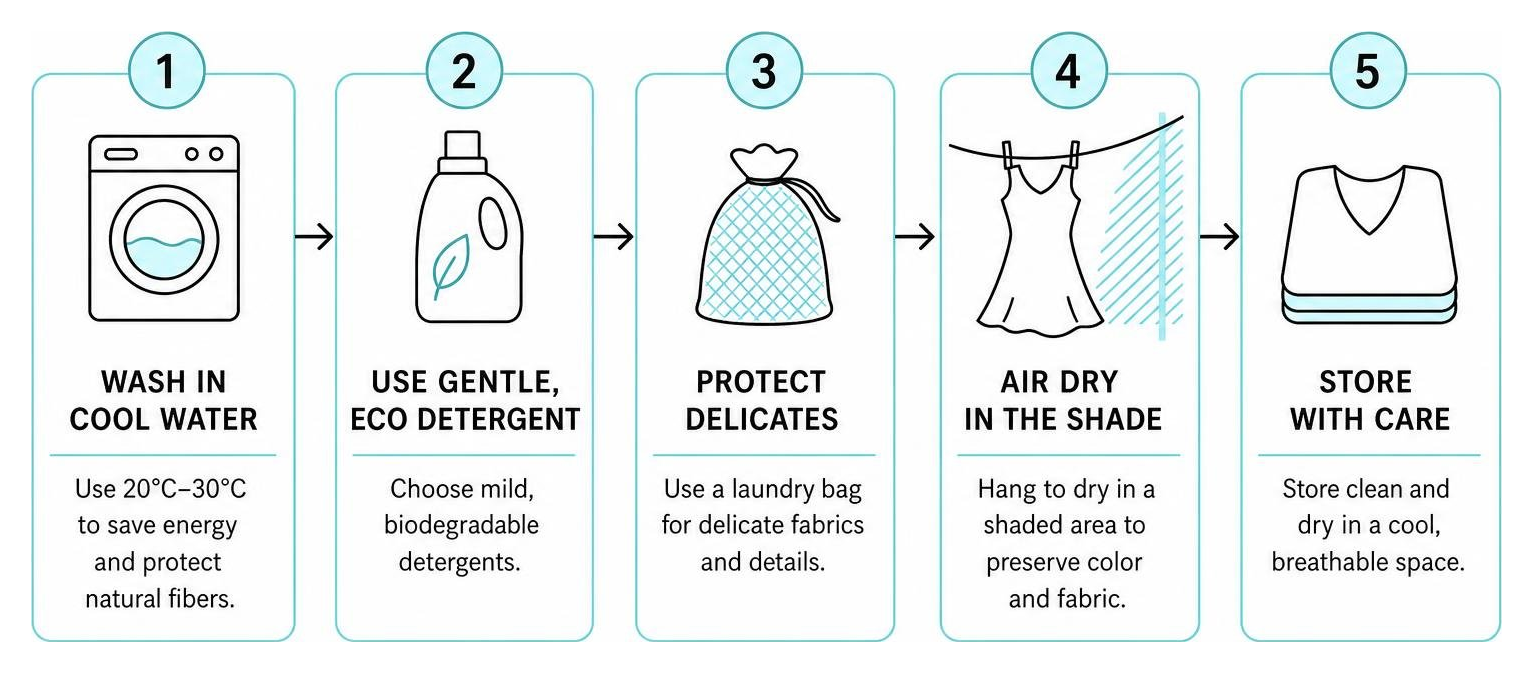
1. Wash in Cool Water (20°C to 30°C)
Heating water accounts for up to 90% of the energy used by a washing machine. Washing your organic cotton, linen, and delicate rayon dresses in cool water (ideally 20°C or 30°C) saves massive amounts of energy. Cool water is also much gentler on natural fibers, preventing shrinkage, preserving vibrant colors, and maintaining fabric integrity.
2. Air Dry in the Shade
Tumble dryers use high heat that can rapidly break down fibers, cause shrinkage, and wear out elastic elements in performance fabrics. Instead, hang your beach dresses to air dry. To prevent the sun’s powerful UV rays from bleaching your favorite prints, always hang your garments to dry in a shaded area out of direct sunlight.
3. Skip the Fabric Softeners
Fabric softeners leave a chemical coating on fabrics that reduces their natural breathability. On performance synthetic fabrics (like those blended with recycled nylon or polyester), softeners can destroy moisture-wicking properties and UV-protective finishes. For natural fibers like linen and organic cotton, skip the chemical softeners and let the fabric soften naturally with wear and washing.
4. Use a Microplastic-Catching Wash Bag
When you wash garments made from recycled synthetics (like ECONYL® or Repreve®), they still shed synthetic microfibers. To prevent these tiny plastics from escaping into our waterways, wash your synthetic beachwear inside a microplastic-catching bag (such as a Guppyfriend bag). This bag captures the fibers before they leave your machine, allowing you to easily dispose of them in the trash.
Frequently Asked Questions About Eco-Friendly Beachwear
What is the price range for sustainable beach dresses?
Sustainable beach dresses generally fall into two categories:
- Accessible DTC Options ($50–$90): Brands utilizing direct-to-consumer models offer high-quality, GOTS-certified organic cotton gauze or Eco Rayon dresses at transparent, budget-friendly prices.
- Luxury and Artisan-Made Resortwear ($150–$400+): These premium pieces are often hand-woven on pedal looms, hand-block printed by traditional artisans, or digitally printed using advanced water-saving techniques.
While sustainable clothing often carries a higher upfront price tag than fast fashion, it reflects the true cost of production: paying living wages to skilled workers, sourcing certified non-toxic dyes, and using premium, long-lasting natural materials. To find great deals, we recommend signing up for brand newsletters to receive first-time customer discounts (usually 10% to 20% off) and shopping seasonal sales.
Are there size-inclusive options for curvy or plus-size women?
Yes! The sustainable fashion movement has made incredible strides in size inclusivity, with many responsible brands now offering extended sizing from XXS to 6X.
To ensure a comfortable, flattering fit for curvy figures, look for designs featuring multi-size stretch fabrics, adjustable wrap-around ties, or generous central back pleats that drape beautifully without pulling. Some brands even offer booty-specific sizing for lower-body garments to prevent excess or insufficient fabric, ensuring that every body shape feels confident and secure on the sand.
Why is organic cotton avoided for active swimwear but great for beach dresses?
Organic cotton is a dream fabric for dry land, but it is not suited for active, in-water swimwear. Because cotton is highly absorbent, a cotton swimsuit will soak up water, become heavy, sag, and take a long time to dry. It also lacks the necessary elasticity and shape retention required to stay securely in place while swimming.
For beach dresses, cover-ups, and dry resortwear, however, organic cotton is highly favored. Its natural breathability, incredible softness against sun-exposed skin, and complete biodegradability make it the perfect choice for lounging by the pool, strolling the shoreline, or enjoying a seaside dinner.
If you are shopping for the little ones in your family, you can explore how these materials are utilized in our guide to Eco-Friendly Kids Swimwear That Saves the Planet and Looks Great.
How Can We Make a Promise to Protect Our Oceans Together?
Choosing comfortable, high-quality, and eco-friendly beach wear dresses is more than a fashion statement—it is a conscious step toward supporting a circular fashion loop. By prioritizing natural, biodegradable fibers and recycled materials, we help divert waste from our oceans, reduce carbon emissions, and protect the delicate marine life that makes our coastlines so magical.
At Salt Water Promise, we believe that small, consistent actions can lead to powerful collective impact. Our philosophy is simple: Wear the wave. Be the change. When you choose responsibly made apparel, you are making a promise to stand for something bigger—to promote clean beaches, support marine conservation, and practice responsible tourism.
Let’s make a promise to leave our beaches better than we found them. Explore our collection of Ocean-Friendly Clothing today, and join us in protecting the waters that inspire us all.


