


The Ultimate Baby Swim Diaper Guide for New Parents
What Every New Parent Needs to Know About Baby Swim Diapers
Baby swim diapers are a must-have before your little one takes their first dip — whether that’s a backyard pool, a beach trip, or a water park adventure.
Here’s a quick overview to get you started:
| What You Need to Know | Quick Answer |
|---|---|
| What they do | Contain solid waste in water; do NOT absorb liquids |
| Do they hold pee? | No — they’re designed to let water flow through |
| Do they hold poop? | Yes, solids only (not diarrhea) |
| Are they required? | Most public pools require them for non-potty-trained children |
| Types available | Disposable and reusable |
| Sizes | Based on baby’s weight, typically starting around 10–14 lbs |
| How often to check | Every 60 minutes |
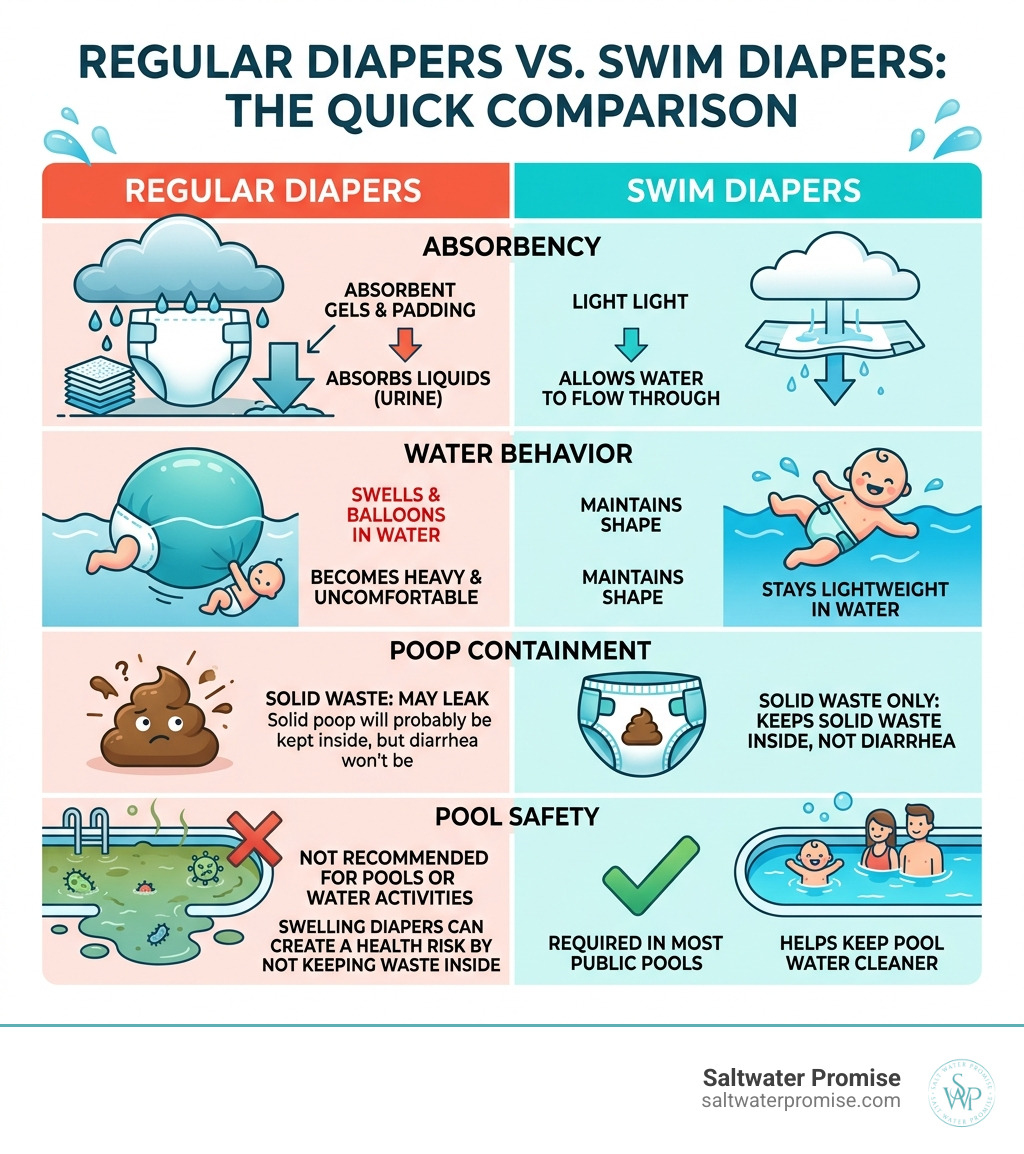
Unlike regular diapers, swim diapers don’t swell or balloon in water. That’s by design — a regular diaper in a pool absorbs so much water it becomes heavy, uncomfortable, and completely useless for containment. Swim diapers skip the absorbent core entirely and instead focus on one job: keeping solid waste from entering the water.
They’re not perfect, though. The CDC notes that swim diapers can delay — but not fully prevent — germ contamination in pool water. This makes proper fit, frequent checks, and good hygiene habits just as important as the diaper itself.
At Saltwater Promise, we’re a coastal lifestyle brand rooted in a love for the ocean and a commitment to protecting it — which means we care deeply about what goes into the water, including how families use baby swim diapers to keep pools and beaches clean. As advocates for responsible coastal living, we’ve put together this guide to help you make the best choice for your baby and the environment.
Discover more about Baby swim diapers:
Understanding How Baby Swim Diapers Protect the Pool
When we take our little ones to the water, our primary goal is fun, but as parents, we also have a collective responsibility to keep that water clean. Baby swim diapers are the frontline defense in maintaining pool hygiene. Unlike the diapers your baby wears for naps or playtime, which are designed to soak up as much liquid as possible, swim diapers are engineered to be “breathable” for water while acting as a net for solids.

The secret lies in the no-swell core. If you’ve ever seen a baby accidentally crawl into a kiddie pool wearing a standard disposable diaper, you know the result: a saggy, heavy, water-logged anchor that looks like it’s about to explode. Standard diapers use super-absorbent polymers (SAP) that expand when they touch liquid. Baby swim diapers use materials like wood pulp or specialized mesh that maintain their shape even when submerged.
This design ensures that your baby can move freely, whether they are splashing in Baby Beach Wear or practicing their first kicks in swim class. More importantly, it ensures the “containment zone” stays tight against the body.
Fecal Containment and Pool Safety
It is a common misconception that swim diapers are “leak-proof.” In reality, they are designed to contain solid waste long enough for you to get your child out of the pool and to a changing station. They are not effective against diarrhea. Because germs like Cryptosporidium can survive in chlorinated water for days, containing solids is vital to preventing recreational water illnesses.
| Feature | Regular Diaper | Swim Diaper |
|---|---|---|
| Absorbency | High (soaks up pee and water) | Low (lets water pass through) |
| In-Water Weight | Becomes very heavy/sags | Stays lightweight and trim |
| Primary Goal | Stay dry and prevent leaks | Contain solid waste |
| Outer Shell | Plastic-like or cloth | Waterproof TPU or specialized fabric |
Sizing and Fit for Baby Swim Diapers
A swim diaper is only as good as its seal. When choosing baby swim diapers, ignore the age on the package and look strictly at the weight ranges. A diaper that is too loose will result in a “gap” at the legs, which is the most common cause of pool contamination.
- Leg Gussets: Look for double leg cuffs or reinforced elastic. These should fit snugly around the thigh without leaving deep red marks.
- Snug Waistband: The waistband should sit high and tight. If you can fit more than two fingers easily into the waistband, it’s likely too big.
- Weight Ranges: Most brands offer sizes ranging from Small (approx. 10–18 lbs) up to X-Large (32–40+ lbs). For example, some premium disposables come in packs where the quantity decreases as the size increases—Small packs might have 20, while Large packs have 17—because the larger diapers require more material to ensure that snug fit.
Eco-Friendly Materials in Baby Swim Diapers
At Saltwater Promise, we believe in “wearing the wave” and protecting our oceans. This extends to the materials we put on our children. Many modern reusable swim diapers are now made from REPREVE® fibers, which are created from recycled plastic bottles. Others utilize OEKO-TEX® certified fabrics, ensuring they are free from harmful chemicals and safe for baby’s sensitive skin.
For those who prefer disposables, look for options with plant-based cores and those that are fragrance-free and hypoallergenic. Choosing Eco-Friendly Kids Swimwear That Saves the Planet and Looks Great is a great way to ensure your beach day has a minimal footprint.
Disposable vs. Reusable: Which is Right for You?
Choosing between disposable and reusable baby swim diapers often comes down to how often you hit the water and your personal stance on sustainability.
Disposable Swim Diapers
Disposables are the ultimate in convenience. They are perfect for vacations, one-off pool parties, or public water parks where you don’t want to carry a soiled reusable diaper around in your wet bag.
- Pros: Easy cleanup (just tear the sides and toss), widely available, and usually feature fun designs like Finding Nemo.
- Cons: They create more waste and can be more expensive over time. A single pack can cost between $10 and $20 depending on the brand and size.
Reusable Swim Diapers
If you have a “water baby” who is in the pool every week for lessons, reusables are the way to go. These are often made with a waterproof outer shell (like TPU) and a soft mesh or terry interior.
- Pros: Economical (one diaper can last a whole season), eco-friendly, and often feature adjustable snaps that allow the diaper to grow with your baby. Some even have “hip snaps” to prevent the fabric from drooping.
- Cons: Requires washing and “solids” must be dumped in a toilet before cleaning.
Many parents choose a hybrid approach: using reusables for local swim lessons and keeping a pack of disposables in their Complete Guide to Kids Beach Clothing kit for travel.
Safety and Hygiene: CDC Best Practices
The CDC provides clear guidelines to help parents prevent the spread of germs in public swimming areas. Even the best baby swim diapers are not a substitute for active parenting and frequent checks.
- The 60-Minute Rule: Check swim diapers every 30 to 60 minutes. Don’t wait for a smell; by then, it might be too late.
- Change Away from the Water: Never change a diaper on the pool deck or beach sand near the shoreline. Use designated diaper-changing areas to prevent germs from washing into the water.
- The Diarrhea Rule: This is the most important tip. If your child has had diarrhea, they must stay out of the water entirely. No swim diaper is designed to hold liquid waste, and the risk of contaminating the entire pool with Cryptosporidium is high.
- Hand Washing: Always wash your hands with soap and water after a change, even if you used wipes.
By following these steps, you’re helping to keep the water safe for everyone. For more on keeping your kids protected, check out our guide on Rash Guards and Beyond Keeping Kids Safe in the Sun.
Frequently Asked Questions about Swim Diapers
Do swim diapers hold pee or absorb water?
No. This is the most common surprise for new parents. Baby swim diapers are made from non-absorbent materials. If they absorbed pee, they would also absorb the pool water, becoming heavy and saggy instantly. They are designed to let liquids flow through while trapping solids. This is why we recommend putting the swim diaper on right before your baby enters the water, and switching back to a regular diaper as soon as they are out.
Are swim diapers required for public pools and water parks?
Yes, almost universally. Most public facilities and swim schools require any child who is not potty-trained to wear a swim diaper. Some facilities even require a “double diapering” policy—a disposable swim diaper underneath a snug-fitting reusable cover—to provide an extra layer of protection against leaks.
How do you properly wash a reusable swim diaper?
To keep your reusable diapers in top shape and ensure they remain hygienic:
- Rinse immediately: Rinse out chlorine or salt water as soon as possible.
- Remove solids: If there was an accident, shake solids into the toilet.
- Gentle Wash: Use a warm or hot wash cycle with a cloth-diaper-safe detergent. Avoid bleach and fabric softeners, as these can break down the waterproof lining (TPU).
- Air Dry: While some can be tumbled dry on low, air drying is usually best to preserve the elastic and lamination. A monthly 15-minute “heat seal” in the dryer can sometimes help maintain the waterproof integrity of certain brands.
Conclusion
Navigating baby swim diapers doesn’t have to be overwhelming. Whether you choose the convenience of disposables or the eco-friendly path of reusables, the goal remains the same: keeping your baby comfortable and our waters clean.
At Saltwater Promise, our mission is to protect the coastlines we love. By choosing the right gear and following smart hygiene practices, you’re doing your part to ensure that the beaches and pools we enjoy today remain pristine for our children’s future. We believe that small actions—like choosing a reusable diaper or checking a swim pant every hour—lead to a powerful collective impact on our environment.
Ready to gear up for your next family adventure? Explore our sustainable youth beachwear collection and join us in our promise to protect the sea.
Wear the wave. Be the change.


