


The Best Organic Cotton Picks for Your Busy Toddler
Why Organic Cotton Toddler Clothing Is Worth the Switch
Organic cotton toddler clothing is one of the simplest ways to protect your child’s sensitive skin while making a more planet-friendly choice. Here’s a quick snapshot of what you need to know:
- Safer for skin: Organic cotton is free from synthetic pesticides, harsh dyes, and chemical finishes that conventional cotton can carry.
- Certified clean: Look for GOTS (Global Organic Textile Standard) or OEKO-TEX Standard 100 labels to confirm genuine organic quality.
- Great for active play: Soft, breathable, and often blended with a touch of spandex for stretch and durability.
- Better for the planet: Organic farming supports healthier soil, cleaner water, and reduced chemical runoff — all things ocean lovers care deeply about.
- Accessible prices: High-quality organic options are more available than ever, proving that sustainable choices don’t have to break the bank.
Toddlers are hard on their clothes. They crawl, splash, tumble, and repeat — all day, every day. Most parents don’t realize that conventional cotton can carry residues from the pesticides and chemicals used during farming and processing. For a toddler who puts everything in their mouth and sweats through two outfit changes before noon, that matters.
The good news? The organic toddler clothing market has grown enormously. There are now options at nearly every price point, from budget-friendly basics to heirloom-quality pieces parents save for the next sibling.
At Saltwater Promise, we’re a coastal lifestyle brand built around one core belief: the choices we make every day — including what we dress our kids in — shape the health of our oceans and planet. Our experience designing organic cotton toddler and youth apparel for beach-loving families means we know exactly what holds up through salt air, sand, and endless play.
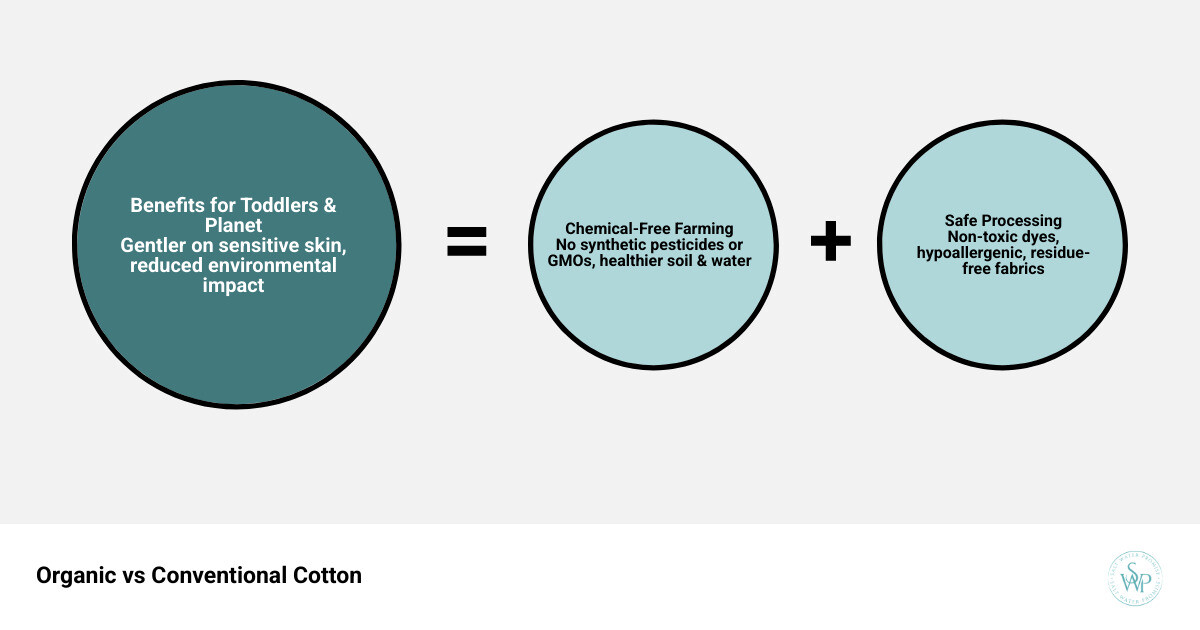
Organic cotton toddler vocabulary:
The Benefits of Choosing an Organic cotton toddler Wardrobe
When we talk about an Organic cotton toddler wardrobe, we aren’t just talking about a fashion trend. We’re talking about a commitment to your child’s health and the health of the coastal environments we love. Toddlers have thinner skin than adults, which means they absorb substances more easily. Choosing organic means choosing a fabric that hasn’t been treated with the “dirty dozen” of synthetic pesticides often used in conventional cotton farming.
Hypoallergenic and Chemical-Free
Conventional cotton is one of the most chemically intensive crops in the world. By the time a standard t-shirt reaches your toddler, it may still contain traces of heavy metals, formaldehyde, and chlorine bleach used during the manufacturing process. For children with eczema or psoriasis, these irritants can trigger painful flare-ups. Organic cotton toddler items are naturally hypoallergenic because they skip these harsh treatments, providing a gentle touch that allows delicate skin to breathe.
Environmental Impact and Ocean Health
As a brand rooted in ocean conservation, we at Saltwater Promise are particularly focused on how clothing production affects our waters. Organic cotton farming uses significantly less water than conventional methods and eliminates toxic runoff into local waterways. When we protect the soil by avoiding synthetic fertilizers, we prevent those chemicals from eventually reaching our coastlines and harming marine ecosystems. Choosing organic is a direct vote for cleaner beaches and thriving oceans.
Essential Playwear: From Rompers to Tees
Toddlers don’t just sit still; they explore. Whether they are digging in the sand or racing across a playground, their clothing needs to keep up. We believe that playwear should be as functional as it is sustainable.

For everyday adventures, a high-quality tee is a must. The Toddler Short Sleeve Tee Y-00008 and the Toddler Jersey T-Shirt Y-00009 offer that perfect lightweight feel that prevents overheating during high-energy play. These pieces are designed for breathability, ensuring that even on a humid day at the shore, your little one stays comfortable. For more tips on dressing your kids for the elements, check out The Complete Guide to Kids Beach Clothing.
Organic cotton toddler Pajamas for Better Sleep
Sleep is when the body recovers, and for a toddler, that means a lot of growing. Organic cotton toddler pajamas are a favorite among parents because they naturally regulate temperature. Unlike synthetic polyester pajamas, which can trap heat and lead to night sweats, 100% organic cotton is moisture-wicking and soft.
Safety is also a top priority. Many organic brands design their sleepwear to meet snug-fit CPSIA regulations without the use of chemical flame retardants. Look for features like:
- Elastic waistbands that don’t pinch.
- Ribbed cuffs at the wrists and ankles to prevent the fabric from bunching up.
- A soft hand-feel that only gets better with every wash.
Durable Organic cotton toddler Playwear for Outdoor Adventures
If you’ve ever watched a toddler try to climb a slide, you know that “stretch” is a vital component of clothing. Many modern Organic cotton toddler garments, such as the Toddler Short Sleeve Tee Y-00001, are crafted with a small percentage of spandex (usually around 5%). This provides the flexibility needed for big movements while maintaining the integrity of the organic fibers.
Designers have also become smarter about toddler anatomy. Look for “drop-crotch” designs in pants and rompers, which provide extra room for diapers and allow for a full range of motion. Reinforced seams are another hallmark of quality organic brands, ensuring that a favorite pair of leggings can survive a tumble on the pavement.
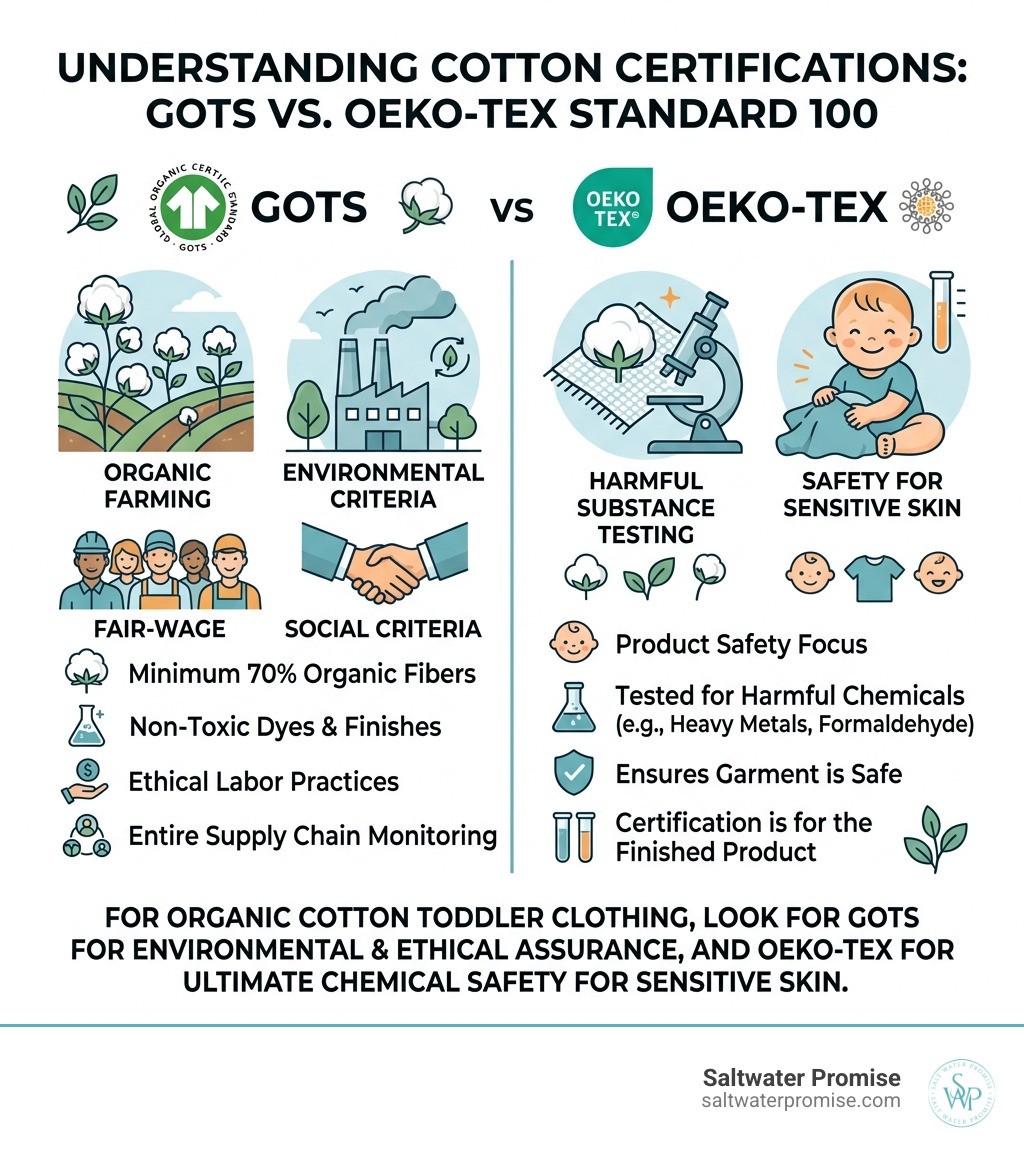
Understanding Certifications: GOTS and OEKO-TEX
With so much “greenwashing” in the fashion industry, how can you be sure you’re actually buying Organic cotton toddler clothes? The answer lies in the certifications.
GOTS (Global Organic Textile Standard)
GOTS is the “gold standard” for organic textiles. It doesn’t just look at the raw cotton; it monitors the entire supply chain. To be GOTS-certified, a garment must:
- Contain at least 70% organic fibers (though many brands aim for 95-100%).
- Meet strict environmental criteria, such as being heavy metal-free and using non-toxic dyes.
- Adhere to social criteria, ensuring ethical labor practices and fair wages for the people making the clothes.
OEKO-TEX Standard 100
While OEKO-TEX doesn’t necessarily mean a product is organic, it does mean every component of the garment—from the thread to the buttons—has been tested for harmful substances. Many parents look for a combination of both GOTS and OEKO-TEX Standard 100 to ensure the highest level of safety and sustainability. Additionally, facilities that are Sedex-certified or WRAP-certified provide further assurance that the clothing was produced in an ethical, lawful environment.
Care and Longevity: Making Organic Fabrics Last
A common misconception is that organic cotton is “delicate.” In reality, organic fibers are often stronger because they haven’t been weakened by harsh chemical processing. However, because they aren’t treated with anti-shrinkage chemicals, they do require a little extra love to maintain their “heirloom quality.”
Best Practices for Washing
- Machine Wash Cold: Heat is the enemy of natural fibers. Washing in cold water prevents shrinkage and preserves the vibrancy of non-toxic dyes.
- Use Gentle Detergents: To maintain the hypoallergenic benefits of your Organic cotton toddler gear, use a plant-based, fragrance-free detergent.
- Turn Inside Out: This simple trick protects the outer surface of the fabric from friction during the wash cycle, preventing “pilling.”
- Hang Dry When Possible: While most organic cotton can handle a “tumble dry low” setting, air drying is the best way to extend the life of the garment and save energy.
Many premium organic brands are pre-washed to minimize initial shrinkage, but you should still expect a small amount of natural contraction after the first laundry day. Because these pieces are built to last, they are perfect for passing down to younger siblings or friends, keeping them out of landfills and continuing their sustainable journey.
Smart Shopping: Finding Quality and Affordability
Building a sustainable wardrobe doesn’t have to be an all-or-nothing investment. Many parents find success by mixing new “hero” pieces with second-hand finds.
Direct-to-Consumer and Seasonal Sales
The rise of direct-to-consumer brands has made Organic cotton toddler clothing much more accessible. By cutting out the middleman, these companies can offer GOTS-certified essentials at a fraction of traditional retail prices. For example, some brands offer everyday organic pants for as low as $12-$14 when bought in bundles.
The Value of “Price-Per-Wear”
When evaluating the cost, it helps to look at the “price-per-wear.” A $10 conventional shirt that loses its shape after three washes is actually more expensive than a $20 organic shirt that lasts for a year of heavy play.
| Feature | Conventional Cotton | Organic Cotton |
|---|---|---|
| Initial Price | $8 – $15 | $15 – $30 |
| Durability | Low (weakened fibers) | High (resilient fibers) |
| Skin Safety | Chemical residues possible | Chemical-free |
| Resale Value | Minimal | High (Heirloom quality) |
| Environmental Cost | High (Pesticides/Water) | Low (Sustainable farming) |
To save even more, join rewards programs or shop seasonal sales. Many parents also utilize second-hand platforms like Poshmark or local “buy nothing” groups, as organic toddler clothes are often in great condition even after one child has outgrown them.
Frequently Asked Questions about Organic Toddler Clothes
Is organic cotton more durable for active toddlers?
Yes! Because organic cotton fibers are not treated with the harsh chemicals used to strip and bleach conventional cotton, the fibers remain stronger and more resilient. This makes them better equipped to handle the constant washing and rough-and-tumble play that defines the toddler years.
How do I know if a brand is truly organic?
The most reliable way is to look for the GOTS (Global Organic Textile Standard) logo on the tag or the brand’s website. You can also check for OEKO-TEX certification, which ensures the finished product is free from harmful chemicals. Transparency is key—reputable brands will often share details about their supply chain and farming partners.
Why is organic cotton better for toddlers with eczema?
Eczema-prone skin has a compromised barrier, making it highly sensitive to external irritants. Conventional clothing can contain residues of formaldehyde, heavy metals, and synthetic fragrances that trigger itching and inflammation. Organic cotton toddler clothing is free from these triggers and offers superior breathability, which helps keep the skin cool and reduces the “itch-scratch” cycle.
Conclusion
Choosing an Organic cotton toddler wardrobe is a powerful way to align your parenting choices with your values. At Saltwater Promise, we believe that every small action—like choosing a t-shirt made with respect for the earth—contributes to a larger wave of change. By prioritizing skin safety, ethical production, and environmental health, you aren’t just dressing your child for today; you’re protecting the world they will inherit tomorrow.
From sun-washed mornings on the beach to cozy evenings at home, our mission is to provide apparel that moves seamlessly with your family’s lifestyle. When you choose organic, you’re making a promise to protect our oceans and preserve the marine life that makes our coastal world so special.
Ready to find your toddler’s next favorite outfit? Shop Organic Toddler and Youth Apparel
Wear the wave. Be the change.
Internal Resources for Coastal Families:


