


Sustainable Swimwear Women Actually Want to Wear
Why Sustainable Fashion Swimwear Is Worth the Switch
Sustainable fashion swimwear is swimwear made from eco-friendly recycled materials — like nylon recovered from fishing nets or polyester made from plastic bottles — produced under ethical conditions and designed to last for years, not just one season.
Quick answers for eco-conscious shoppers:
- Best materials to look for: ECONYL® (recycled nylon from fishing nets), Repreve® (recycled polyester from plastic bottles), and recycled polyamide
- Key certifications: OEKO-TEX Standard 100, Global Recycled Standard (GRS), Fair Trade
- Why not natural fibers? Cotton absorbs water, loses shape, and dries slowly — recycled synthetics perform far better in the water
- Signs of a truly sustainable brand: Ethical manufacturing, low-waste production, size inclusivity, repair programs, and eco-friendly packaging
- How to make it last: Hand wash in cold water, air dry, and choose double-lined, durable styles you’ll reach for season after season
Here’s the uncomfortable truth: most swimwear is made from virgin synthetic fabrics, manufactured under questionable labor conditions, and designed to be replaced every season. That’s a lot of waste — and a lot of ocean damage — for something you wear a few months a year.
The good news? That’s changing fast.
Recycled swimwear fabrics are now diverting hundreds of thousands of plastic bottles from landfills. Brands are recovering fishing nets — which make up nearly 10% of ocean pollution — and turning them into beautiful, high-performance suits. And shoppers like you are demanding better.
At Salt Water Promise, we’re a coastal lifestyle brand founded on the belief that the ocean gives us everything — and we owe it something back. That mission shapes how we think about sustainable fashion swimwear and everything we share about it. We’ve spent years learning what it really means to make responsible choices at the beach, and we’re here to help you do the same.
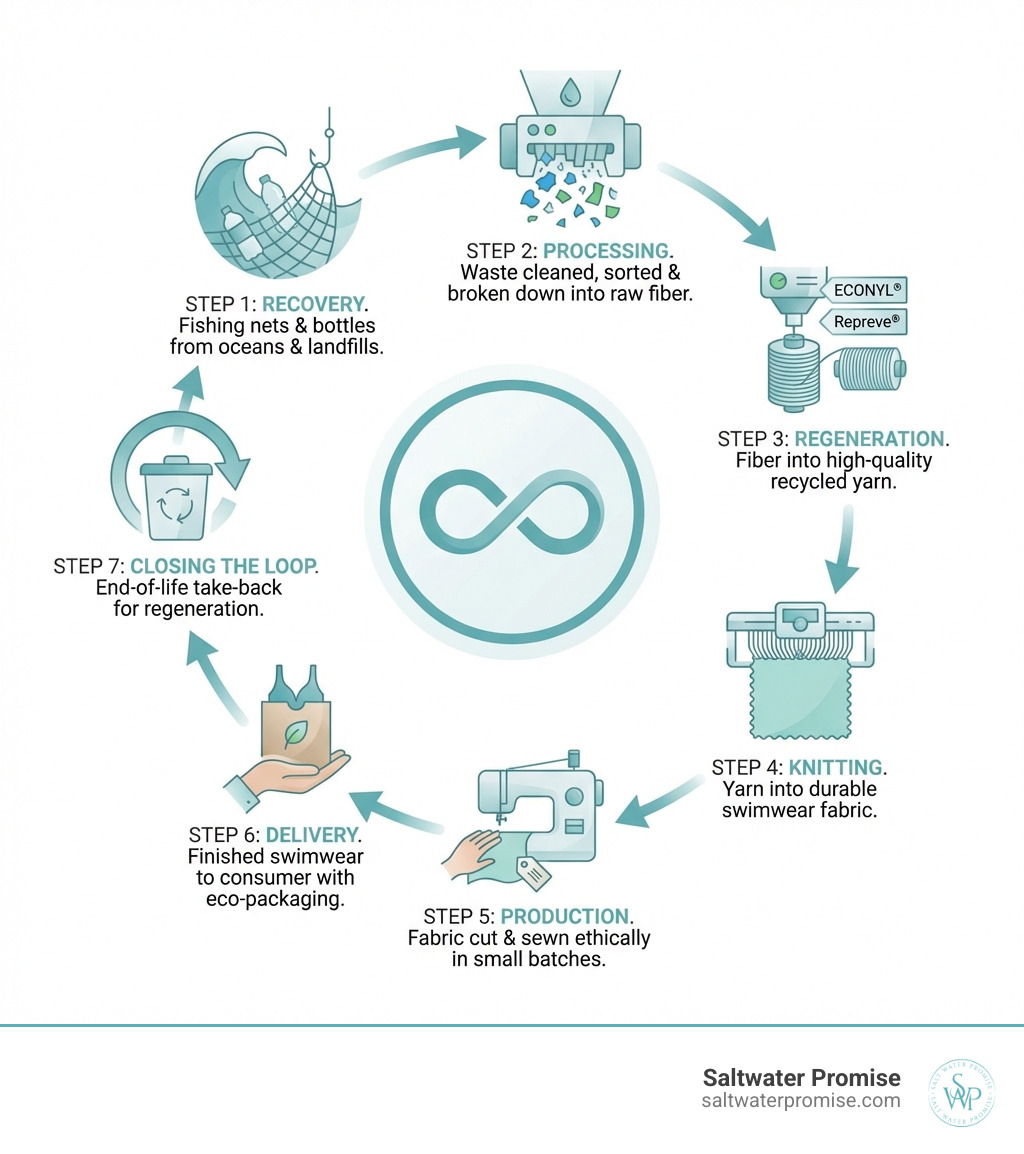
Simple guide to Sustainable fashion swimwear:
What Defines Sustainable Fashion Swimwear?
When we talk about sustainable fashion swimwear, we are looking at a holistic approach to how a garment is made. It isn’t just about the fabric—though that is a massive part of it—it’s about the entire lifecycle of the suit. True sustainability means the piece was created with the lowest possible environmental impact and the highest regard for human rights.
The foundation of most eco-friendly suits today is regenerated waste. Instead of pumping new petroleum to create virgin polyester or nylon, brands are cleaning up our coastlines. For example, some collections have diverted over 335,000 plastic bottles from landfills to create soft, durable fabrics. Others focus on “waste-to-wear” models that recover nearly 2,000 lbs of nylon waste, which saves thousands of kilograms of CO2 and massive amounts of energy compared to traditional manufacturing.
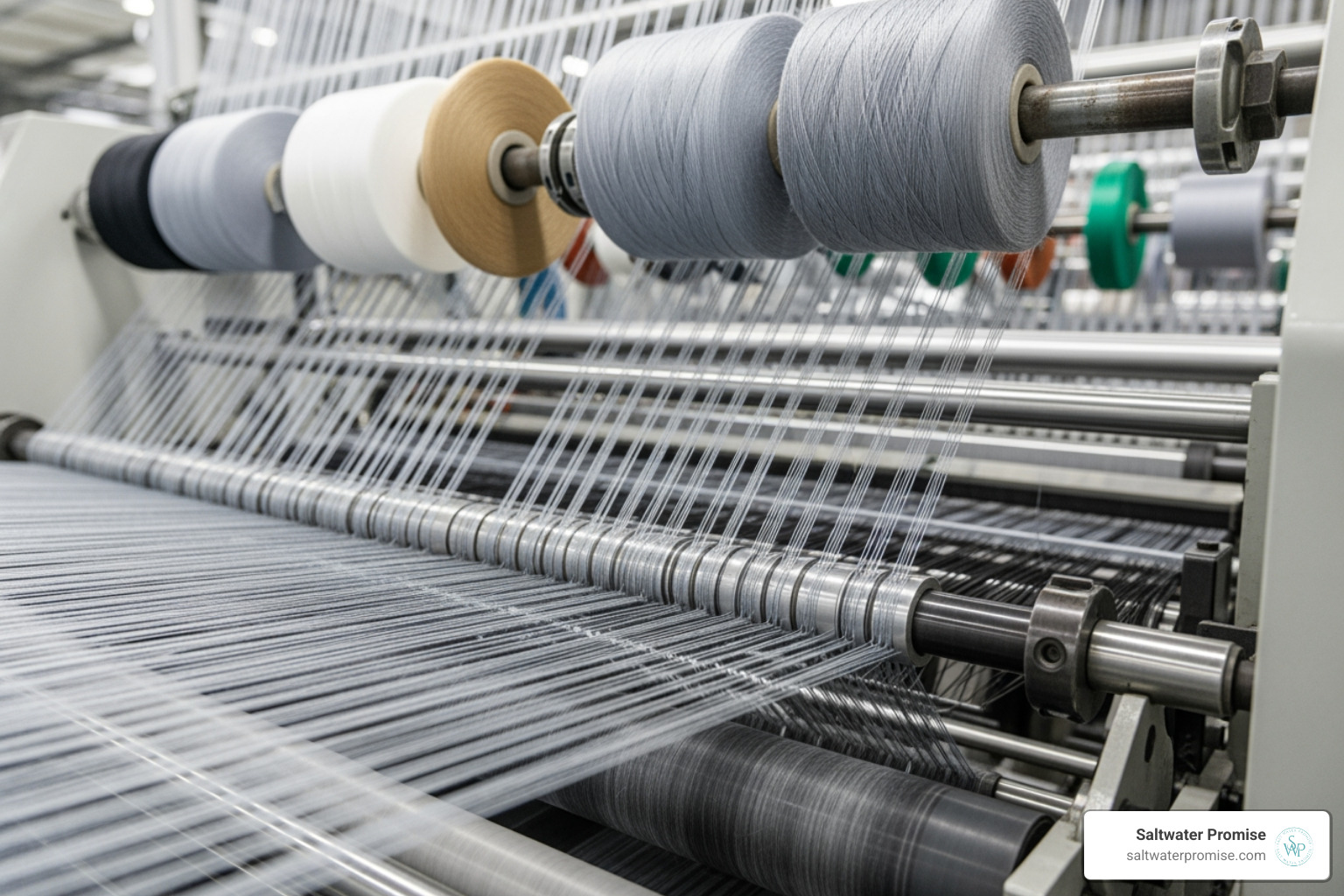
The Leaders in Eco-Fabrics: ECONYL® and Repreve®
If you look at the tag of a high-quality sustainable swimsuit, you’ll likely see one of two names: ECONYL® or Repreve®.
- ECONYL®: This is regenerated nylon made from pre- and post-consumer waste. Think abandoned fishing nets (ghost nets), fabric scraps from floors, and even old industrial carpets. The beauty of this material is that it is infinitely recyclable without ever losing its quality.
- Repreve®: This is the world’s leading brand of recycled performance fiber. It is primarily made from recycled plastic bottles. By choosing this, you are helping to reduce the demand for new petroleum and keeping plastic out of our oceans.
Using these materials is a key part of choosing ocean-friendly clothing that aligns with a conservation-minded lifestyle.
Comparing the Impact: Virgin vs. Recycled
| Environmental Impact | Virgin Polyester | Recycled Polyester (Repreve®) |
|---|---|---|
| Energy Consumption | 100% (Baseline) | ~45% Less |
| Water Usage | High | ~20% Less |
| CO2 Emissions | High | ~30% Less |
| Material Source | Crude Oil (Petroleum) | Post-consumer Plastic Bottles |
Why Recycled Synthetics Outperform Natural Fibers
We often think of “natural” as “better,” but in swimwear, that isn’t the case. While organic cotton and hemp are fantastic for a breezy beach cover-up, they make for terrible swimsuits.
Natural fibers are highly absorbent. If you’ve ever tried to swim in a cotton t-shirt, you know it becomes heavy, sags, and stays wet for hours. This leads to chafing and a suit that loses its shape after just one dip. Recycled synthetics, on the other hand, are engineered for the water. They offer:
- Low Water Absorption: They don’t get heavy when wet.
- Fast Drying: Essential for moving from the shoreline to a seaside cafe.
- Shape Retention: High-quality recycled nylon blended with elastane provides the stretch and “snap-back” needed to keep the suit fitting like a glove.
- Chlorine and Salt Resistance: Sustainable fabrics are often twice as resistant to chlorine and suntan oils as traditional fabrics.
However, we must address the “plastic” in the room: microplastics. Scientific research on microplastics in water shows that while treatment plants remove the vast majority, synthetic clothes still shed fibers. We recommend using a microfiber wash bag to catch these before they leave your laundry machine.
Essential Certifications for Eco-Conscious Shoppers
With “greenwashing” on the rise, we have to look for third-party verification. These labels ensure that sustainable fashion swimwear is actually as “green” as it claims to be:
- OEKO-TEX Standard 100: This is a huge one. It certifies that every component of the suit—from the fabric to the thread and zippers—has been tested for harmful substances and is safe for your skin.
- Global Recycled Standard (GRS): This verifies the recycled content in the fabric and tracks it from the source to the final product. It also includes strict social and environmental requirements.
- Fair Trade: This ensures that the people sewing your swimsuit were paid a living wage and worked in safe, ethical conditions.
- PFAS-Free: Look for brands that explicitly state they do not use “forever chemicals” for water repellency.
Key Features of Sustainable Fashion Swimwear
A sustainable swimsuit shouldn’t just be “less bad” for the planet; it should be better for you. Because these brands focus on “slow fashion,” they tend to invest more in the quality of construction.
You will often find that sustainable fashion swimwear is double-lined. This isn’t just for modesty; it provides better compression, a more flattering fit, and ensures the suit won’t become see-through over time. Many eco-fabrics also naturally offer UPF 50+ sun protection, which is a massive win for those of us spending long days under the sun.
To truly make a splash with eco-friendly swimwear, look for small-batch production. When brands produce in smaller quantities, they reduce the risk of “deadstock” (unsold clothing) ending up in a landfill. Some even use zero-waste cutting techniques, using fabric off-cuts to create accessories like scrunchies or headbands.
Choosing Sustainable Fashion Swimwear for Every Body Type
The sustainable movement has led the charge in body inclusivity. We believe that everyone deserves to feel confident at the beach, and the brands we admire reflect that.
We are seeing size ranges expand from XXS all the way to 6X. But inclusivity is about more than just a number on a tag; it’s about fit. Many sustainable brands now offer:
- Long-torso options: A lifesaver for taller women who find standard one-pieces uncomfortable.
- Adjustable straps and tie-backs: These allow you to customize the support based on your bust size.
- Compression technology: High-quality recycled textiles can offer up to five times the strength and four times the compression of standard swimwear, providing a “sculpted” feel without being restrictive.
Performance Styles in Sustainable Fashion Swimwear
Whether you are lounging by a pool or paddling out for a surf session, there is a sustainable style for you.
- Active Surf Suits & Rash Guards: For those who need maximum coverage and “stay-put” technology. These are often made with thicker recycled polyamides that won’t budge during a wipeout.
- High-Waisted Bikinis: Perfect for those who want a bit more tummy coverage while still enjoying a two-piece.
- Minimalist One-Pieces: The “LBD” of the beach. These are designed to be timeless, so you’re not tempted to buy a new one when the “trend” changes next year.
Don’t forget the little ones! Choosing kids swimwear that cares ensures that the next generation is protected from the sun while wearing materials that protect the oceans they love to play in.
Extending the Lifecycle of Your Swimsuit
The most sustainable swimsuit is the one you already own—or the one you keep for a decade. While high-quality sustainable fashion swimwear is built to last (some brands even guarantee their suits for 100 wears or two years), how you care for it matters.
Our best tips for longevity:
- Rinse Immediately: After every swim, rinse your suit in cold, fresh water. This removes salt, chlorine, and sunscreen oils that can break down fibers.
- Hand Wash Only: Avoid the washing machine if possible. Use a gentle, eco-friendly detergent.
- Never Wring it Out: To dry, lay the suit flat on a towel and roll it up to squeeze out excess water. Wringing damages the delicate elastane fibers.
- Avoid the Dryer: Heat is the enemy of stretch. Always air dry your suits in the shade, as direct sunlight can fade those beautiful low-impact dyes.
Many forward-thinking brands now offer repair programs for small snags or seam pops. Some even have take-back initiatives where you can send in an old suit to be professionally recycled into new materials, closing the loop on fashion waste.
Frequently Asked Questions about Sustainable Swimwear
What is the most eco-friendly swimwear material?
Currently, regenerated nylon (like ECONYL®) and recycled polyester (like Repreve®) are the gold standards. They address the waste problem by using existing plastic pollution and require significantly less water and energy to produce than virgin materials.
How do I verify a brand’s sustainability claims?
Look for “receipts.” A brand should be transparent about where their factory is located and what certifications they hold (OEKO-TEX, GRS, B-Corp). If a brand uses vague terms like “green” or “eco-friendly” without explaining how, it might be greenwashing.
Can sustainable swimwear handle chlorine and salt water?
Yes! In many cases, it handles it better. Because sustainable brands focus on durability, their fabrics are often engineered to be twice as resistant to chlorine, salt, and oils compared to the cheap, thin fabrics found in fast-fashion shops.
Conclusion
At Salt Water Promise, we believe that the shoreline is a place of renewal. By choosing sustainable fashion swimwear, you are making a choice to protect that renewal. You are supporting the recovery of fishing nets that entangle marine life and the recycling of plastic bottles that litter our beaches.
Choosing eco-conscious apparel is a small but powerful way to “wear the wave” and be the change. It’s about more than just a bikini or a one-piece; it’s about a lifestyle rooted in respect for nature and a commitment to leaving our oceans better than we found them.
Ready to make your promise to the ocean? Shop Saltwater Promise today and find styles that blend effortless coastal beauty with a deep purpose. Together, we can ensure our beaches stay beautiful for generations to come.


