


Small Clothes with a Big Future
Why Sustainable Kids Clothing Matters More Than You Think
Sustainable kids clothing is children’s apparel made from organic, recycled, or low-impact materials, produced under ethical conditions, and designed to last longer than conventional fast-fashion alternatives.
Kids grow fast. Really fast. The average child moves through several clothing sizes before their fifth birthday. That means more buying, more discarding, and more pressure on an industry that already produces enormous amounts of textile waste.
Fast fashion makes this worse. Cheap, low-quality clothes worn a handful of times before falling apart — or being outgrown — end up in landfills at a staggering rate. And many conventional children’s garments are made with harsh dyes, synthetic chemicals, and pesticide-heavy fabrics that sit directly against a child’s sensitive skin.
The good news? A growing wave of brands is doing things differently — building clothes that are gentler on kids, kinder to the planet, and designed to last through years of play, washing, and hand-me-downs.
Here at Saltwater Promise, we’re a coastal lifestyle brand rooted in the belief that protecting the ocean starts with the choices we make every day — including what we put on our kids. As advocates for sustainable kids clothing and responsible ocean stewardship, we’ve rounded up the best eco-friendly options to help your family shop with purpose.
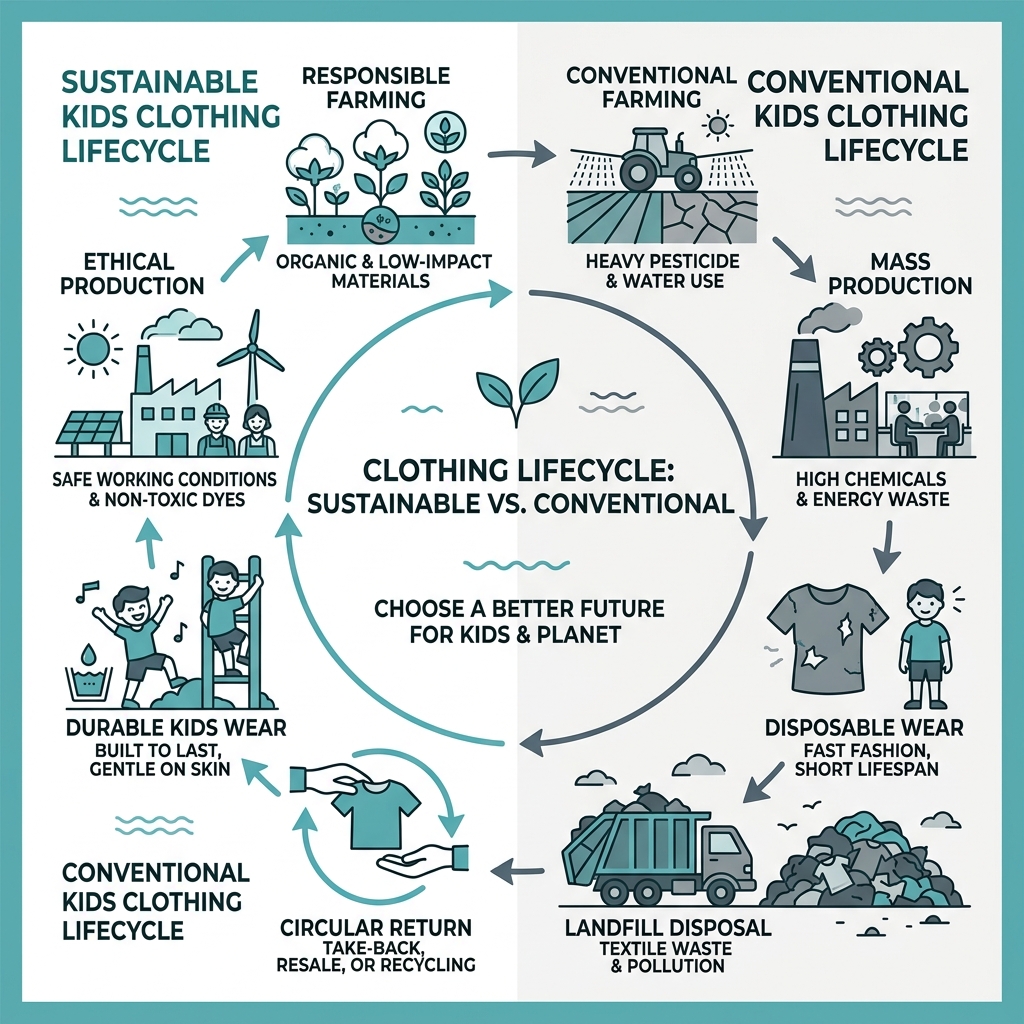
Sustainable kids clothing word guide:
What Defines Sustainable Kids Clothing?
When we talk about sustainable kids clothing, we aren’t just talking about a “green” label. True sustainability is a holistic approach that covers how the raw fibers are grown, how the workers are treated, and what happens to the garment once your child outgrows it.
For us at Saltwater Promise, sustainability is deeply tied to the health of our coastlines. Conventional cotton farming, for instance, is one of the most chemically intensive processes in the world. These pesticides and synthetic fertilizers eventually wash into our waterways, leading to “dead zones” in the ocean where marine life cannot survive. By choosing brands that prioritize agroecological farming impacts, we support systems that nourish the soil rather than deplete it.
Essential Certifications for Safety
Navigating eco-labels can feel like learning a second language. To make it easier, here are the “gold standards” we look for:
- GOTS (Global Organic Textile Standard): This is the ultimate certification. It ensures that at least 70% (usually 95%+) of the fibers are organic and that strict environmental and social criteria are met throughout the entire supply chain.
- OEKO-TEX Standard 100: This doesn’t necessarily mean the fabric is organic, but it guarantees the finished product has been tested for over 100 harmful substances. It’s a must for ensuring safety against skin irritants.
- Global Recycled Standard (GRS): This tracks recycled content and ensures responsible social and environmental practices during processing.
When shopping for summer fun, looking for these labels on kids swimwear that cares top sustainable picks ensures your little ones are protected from both the sun and harmful chemicals.
The Importance of Non-Toxic Dyes
Have you ever noticed a strong chemical smell when opening a package of new clothes? Those are often Volatile Organic Compounds (VOCs) from synthetic dyes. Conventional dyes frequently contain heavy metals and AZO compounds, which can be absorbed through the skin.
Since children have thinner skin and higher absorption rates, we prioritize brands that use non-toxic, water-based, or AZO-free dyes. This is especially vital for everyday staples like a toddler short sleeve tee y 00008, which spends hours in direct contact with your child’s body during active play.
The Best Materials for Sensitive Skin and Active Play
Choosing the right material is the first step in building a wardrobe that lasts. We want fabrics that breathe during a hot day at the beach but are tough enough to survive a crawl through the dunes.
| Material | Best For | Eco-Benefit |
|---|---|---|
| Organic Cotton | Everyday wear, pajamas | No pesticides, saves water |
| TENCEL™ Lyocell | Soft layers, summer dresses | Made from wood pulp, closed-loop |
| Recycled Polyester | Outerwear, swimwear | Diverts plastic from oceans |
| Linen | Breathable summer styles | Low water usage, biodegradable |
Using eco-friendly kids swimwear that saves the planet and looks great is a fantastic way to introduce recycled materials into your child’s closet. Many of these pieces are crafted from regenerated nylon made from old fishing nets—literally cleaning the ocean while your kids play in it!
Why Organic Cotton is Essential for Sustainable Kids Clothing
Organic cotton is the backbone of the eco-friendly movement. Unlike conventional cotton, which uses about 16% of the world’s insecticides, organic cotton relies on natural solutions like crop rotation and beneficial insects.
This results in a fiber that is significantly softer because it hasn’t been weakened by harsh chemical processing. For a high-use item like a toddler jersey t shirt y 00009, organic cotton provides the durability to withstand dozens of washes while remaining hypoallergenic for sensitive skin.
Innovative Recycled Fabrics for Outerwear
While we love natural fibers, sometimes we need the performance of synthetics—especially for rain gear and winter coats. This is where recycled polyester shines. Leading eco-conscious brands use polyester made from post-consumer plastic bottles.
Transforming waste into a youth heavy blend hoodie y 00007 gives plastic a second life and reduces the demand for virgin petroleum-based fabrics. It’s a win for the wardrobe and a win for the whales.
Designing for Longevity: Circularity and Growth
The biggest challenge with sustainable kids clothing is the “growth spurt.” How do we justify a higher price point for a shirt that might only fit for six months? The answer lies in circular design.
We look for brands that incorporate “grow-with-me” features. This includes:
- Roll-down cuffs: Leggings and sleeves that can be unrolled as the child grows.
- Adjustable waistbands: Elastic with buttons to tighten or loosen the fit.
- Reinforced knees: Extra layers of fabric where kids are hardest on their clothes.
By following the complete guide to kids beach clothing, you can find pieces designed with these versatile fits in mind.
Embracing Circularity in Sustainable Kids Clothing
The most sustainable garment is the one that is already in circulation. Many forward-thinking brands are leading the way with “buy-back” programs. Once your child outgrows their gear, you can send it back to the brand for store credit. They then renew and resell the items as “pre-loved,” ensuring nothing hits the landfill prematurely.
Features That Extend Garment Life
Durability is a form of sustainability. If a shirt can last through hundreds of washes, it can be passed down through three or four children instead of one. Timeless aesthetics also play a role; a classic youth short sleeve t shirt y 00004 in a neutral tone never goes out of style, making it the perfect hand-me-down for siblings or cousins.
How to Build an Affordable Eco-Friendly Wardrobe
We know that “sustainable” can sometimes feel synonymous with “expensive.” However, by shifting our mindset from “fast fashion” to “slow fashion,” we can actually save money in the long run.
- The Capsule Wardrobe: Instead of 20 cheap shirts, buy 5 high-quality ones that mix and match perfectly.
- Bundle and Save: Many eco-brands offer discounts when you buy sets or “bundles.”
- Shop the Sales: End-of-season sales for a youth short sleeve t shirt y 00006 are the best time to stock up for the following year.
Smart Shopping for Sustainable Kids Clothing
Secondhand marketplaces are a goldmine for sustainable kids clothing. Because these clothes are built to last, they often look brand new even after several months of wear. Searching for specific organic brands on resale sites is a great way to find a toddler short sleeve tee y 00001 at a fraction of the retail price.
Maintenance Tips for Eco-Fabrics
How you care for the clothes is just as important as how they were made. To extend the life of your garments and protect the ocean:
- Wash in cold water: This prevents fiber breakdown and saves energy.
- Use natural detergents: Avoid phosphates and harsh surfactants that harm marine life.
- Air dry when possible: The dryer is the enemy of fabric longevity.
For outdoor gear, ensuring proper care helps maintain kids youth sun protection essential gear for beach pool fun so it stays effective for several seasons.
Frequently Asked Questions
Which certifications are most important for baby clothes?
For babies, GOTS and OEKO-TEX Standard 100 are the most critical. Babies have much more sensitive skin than adults, and their habit of chewing on their clothes means you want to ensure there are zero toxic residues or heavy metals in the fabric.
How do I find affordable eco-friendly options?
The best way is to look for brands with “pre-loved” sections on their own websites. You get the quality of a sustainable brand with a significant discount. Additionally, buying gender-neutral styles allows you to pass clothes between siblings regardless of gender, doubling the value of every purchase.
Are recycled materials safe for children with eczema?
Yes, provided they are certified. Look for recycled polyester that is OEKO-TEX certified to ensure no harmful chemicals were used in the recycling process. However, for direct-to-skin layers like pajamas, organic cotton or TENCEL™ are usually the most breathable and soothing options for eczema-prone skin.
Conclusion
At Saltwater Promise, we believe that the clothes our children wear should reflect the world we want them to inherit. By choosing sustainable kids clothing, we are taking a stand for clean oceans, healthy soil, and ethical labor.
Every organic cotton tee and every recycled swimsuit is a small promise kept to the planet. We invite you to join us in this mission—to wear the wave and be the change. Together, we can ensure our children have a beautiful, thriving ocean to explore for generations to come.
Ready to start your journey toward a more conscious closet? Shop our sustainable collection today and find pieces that your kids will love and the planet will thank you for.


