


From Waves to Walkways with the Best Girls Beach Coverups
Why the Right Girls Beach Coverup Makes Every Beach Day Better
A great girls beach coverup does more than keep sand off the car seat – it protects young skin from the sun, makes transitions from water to walkway effortless, and keeps kids comfortable all day long.
Quick answer: What makes a good girls beach coverup?
| Feature | What to look for |
|---|---|
| Sun protection | UPF 50+ rated fabric |
| Style | Hooded tunic, dress, romper, kimono, or zip-front |
| Fabric | Cotton, terry cloth, nylon-spandex, or mesh |
| Fit | Easy pull-on, relaxed over swimsuit |
| Age range | Toddler (2T-5T) through big girls (7-16) |
| Best use | Beach, pool, swim lessons, boardwalk strolls |
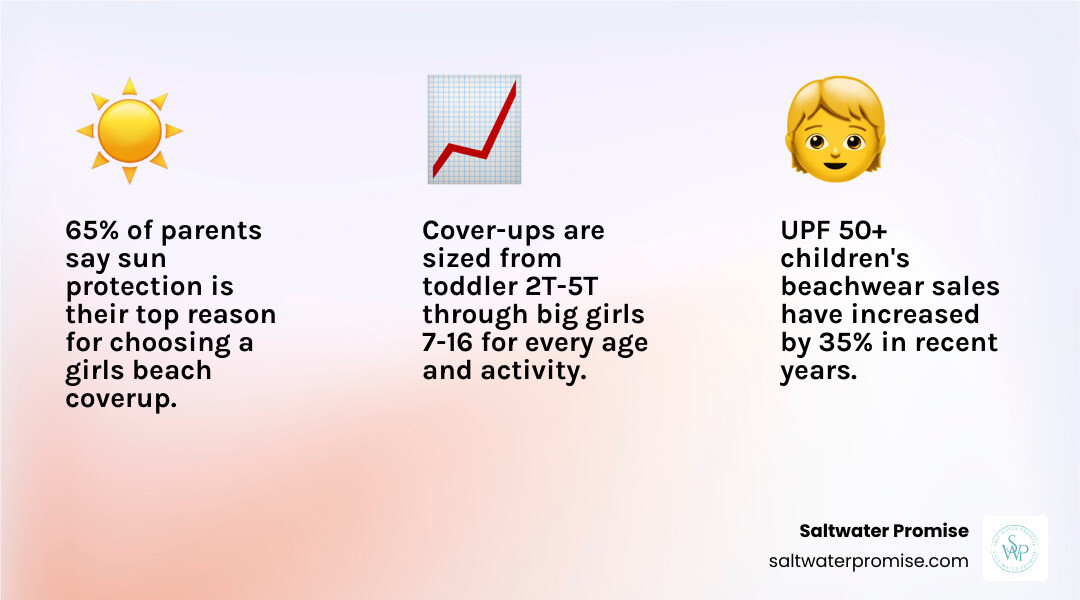
Here’s why it matters: over 65% of parents say sun protection is their top reason for buying a cover-up alongside a swimsuit. And with UPF 50+ children’s beachwear sales up 35% in recent years, parents are clearly paying more attention to what their kids wear between swims – not just what they wear in the water.
Whether your daughter is wrapping up after swim class, heading to the snack bar, or strolling a sunny boardwalk, the right cover-up handles it all without a fuss.
At Salt Water Promise, we’re a coastal lifestyle brand rooted in Indian Rocks Beach, Florida – and designing beach-ready apparel for kids, including girls beach coverups that balance style, sun safety, and ocean-conscious values, is at the heart of what we do. In this guide, we’ll walk you through everything you need to know to find the perfect fit for your little beach lover. For parents who want to learn more about how sun-protective clothing works, the Skin Cancer Foundation’s guide to sun-protective clothing is a helpful external resource.
Easy Girls beach coverup glossary:
Girls beach coverup styles parents should know
The most popular Girls beach coverup styles today blend three things: sun coverage, easy movement, and throw-on simplicity. In plain English, parents want something that goes on fast, feels good wet or dry, and does not trigger a dressing-room negotiation on the beach.
The main styles we see across the market include:
- Hooded tunics
- Cover-up dresses
- Rompers
- Kaftans
- Kimonos
- Zip-front styles
- Tie-front wraps
- Mesh dresses
- Rashguard dresses
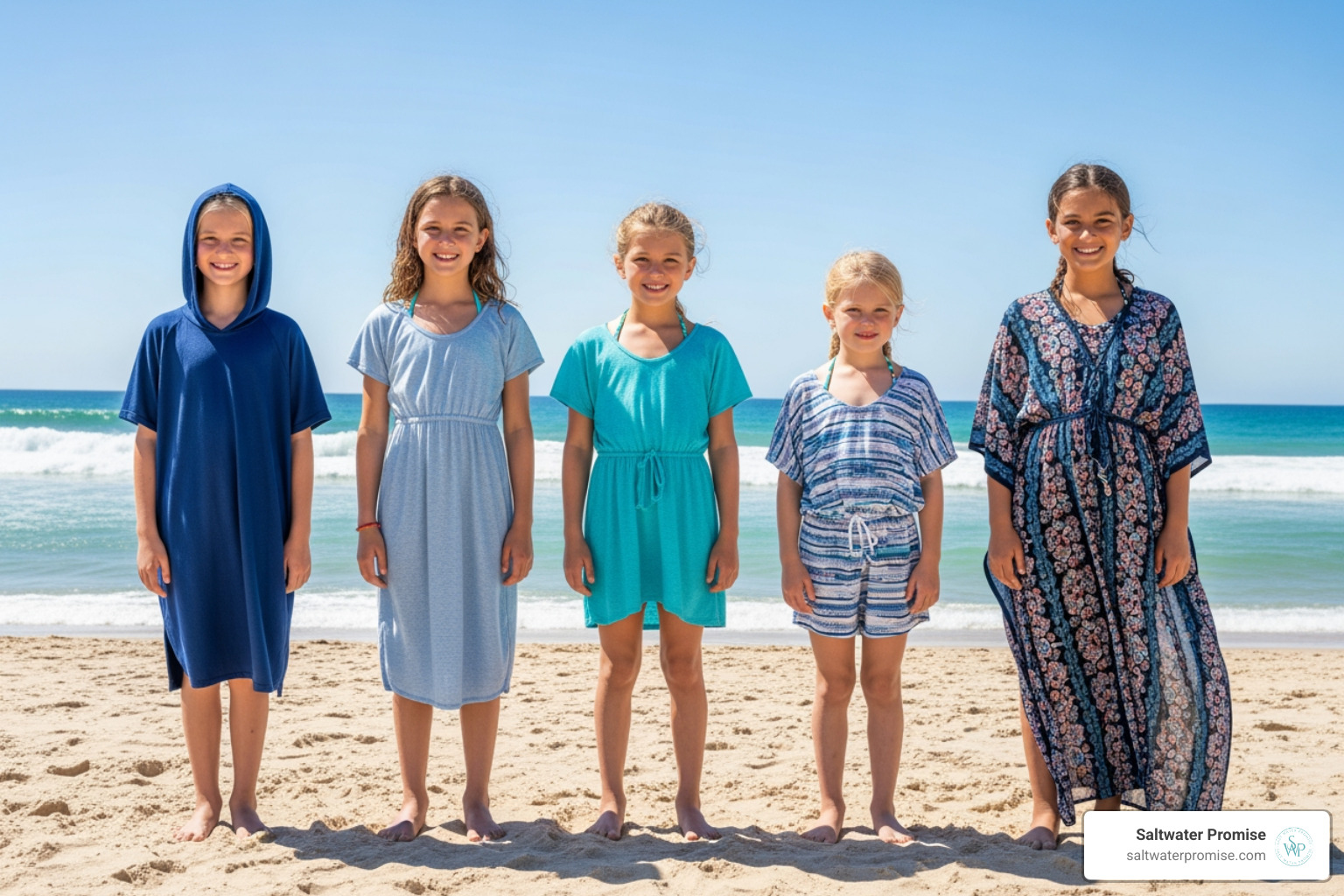
Hooded tunics are especially practical for windy beaches or high-sun afternoons because they add neck and shoulder coverage. Dresses are the easy favorite for quick changes. Rompers work well for active kids who are climbing, running, and turning a beach day into an obstacle course. Kaftans and kimonos feel airy and stylish, while zip-front and pull-on designs are usually easiest for younger kids to manage.
Best Girls beach coverup options for beach, pool, and boardwalk
For beach days, we usually recommend styles with a little more coverage and fabrics that handle salt, sand, and repeated wear well. Tunics, rashguard dresses, and roomy cover-up dresses are strong picks.
For pool days, quick-dry pieces tend to win. Lightweight mesh, nylon-spandex blends, and easy pull-on dresses help kids move from water to lounge chair to snack break without feeling soggy.
For boardwalks, resort walks, or post-swim lunch stops, a dress-style cover-up or romper often looks the most polished while still being kid-friendly. The goal is to find that sweet spot between “just swam” and “totally presentable for fries.”
If you want to compare popular silhouettes, focus on practical details like sleeve length, fabric weight, dry time, and how easily a style layers over a swimsuit.
Dress, tunic, romper, or matching set?
Each silhouette does a slightly different job.
- Dress: Best for easy on-off, breezy comfort, and boardwalk-to-lunch versatility
- Tunic: Best for extra coverage, especially with sleeves or a hood
- Romper: Best for active play and less riding up during movement
- Matching set: Best for coordinated style and easier vacation packing
A dress works well for kids who want something soft and flowy. A tunic is often the most functional if sun protection is the top priority. A romper is great for playground stops and beach games. Matching sets simplify outfit planning and create a more put-together look for travel photos, family outings, and sibling coordination.
For more on coordinated swim looks, see Two-Piece Harmony: Dive into Matching Bathing Suits and Cover-Ups.
Current colors, prints, and design trends for 2026
In 2026, girls’ beachwear trends are balancing playful details with cleaner, more wearable colors. The most common directions include:
- Soft pastels
- Tropical prints
- Nautical stripes
- Floral patterns
- Color-block designs
- Ruffle accents
- Crochet-look textures
- Bright beach colors
- Minimal solids
Pastels and florals remain popular for younger girls, while older kids often lean toward color-block looks, stripes, and simple solids with one standout detail like a hood, zipper, or ruffle sleeve. Crochet-inspired textures and mesh overlays are also trending, though we always suggest checking comfort and practicality before chasing a trend. Cute matters. Itching does not.
For more color inspiration, visit Color Your Cover-Up: From Bold Blue to Boho Chic, Find Your Perfect Match.
How to choose the best Girls beach coverup fabric
Fabric is where comfort, protection, and durability all come together. The best choice depends on whether your child needs softness, fast drying, higher coverage, or all three.
Common cover-up fabrics include:
- Cotton
- Terry cloth
- Mesh
- Nylon-spandex blends
- Polyester blends
- Organic cotton
- Lightweight knits
- Double-cloth fabrics
The broader beachwear market is growing fast, with global beachwear projected to reach $11.6 billion by 2030. Within children’s beachwear, girls’ swimwear and cover-up products account for roughly 28% of the market, so it is no surprise that fabric options have become more specialized.

Which materials feel best in hot weather?
For pure softness in hot weather, cotton is hard to beat. It feels breathable, gentle on sensitive skin, and comfortable for lounging. Organic cotton and double-cloth cotton are especially nice when you want something airy and lightweight.
Mesh can feel cooler because it allows more airflow, but it offers less sun coverage unless layered. Terry cloth is cozy after swimming and absorbent, which is helpful for shivering pool exits, though it can feel heavier in peak heat.
Nylon-spandex and polyester blends are often the best choice for active beach days because they are lightweight, stretchy, and faster drying than cotton. If your child is going in and out of the water constantly, quick-dry fabrics usually make the whole day easier.
Fabrics that help with sun protection and durability
For stronger sun protection, look for:
- UPF 50+ rated fabric
- Tighter weaves
- Long sleeves
- Higher necklines
- Hoods for added coverage
UPF 50+ is widely considered the highest rated sun protection level in apparel, and that is one reason why sales of children’s UPF 50+ cover-ups and rashguard-style pieces have risen so sharply.
For durability, nylon-spandex and polyester blends usually perform best because they resist stretching out, dry quickly, and handle abrasion better than delicate open weaves. These fabrics also tend to hold up better after repeated pool use, especially where chlorine exposure is a factor.
Cotton is comfortable, but it generally absorbs more water and may take longer to dry. Mesh dries fast, but can snag more easily depending on the knit. If you need a cover-up for frequent use, fabric resilience matters just as much as appearance.
Care tips to make cover-ups last longer
A few simple habits can extend the life of any cover-up:
- Rinse after beach or pool use to remove salt, chlorine, and sunscreen buildup
- Wash according to the care label
- Use gentle cycles for stretch fabrics
- Avoid high heat when possible
- Line dry to help preserve elasticity and color
- Pack lighter knits flat to avoid stretching
- Keep rough Velcro away from mesh and delicate weaves
Quick-dry performance fabrics are usually low-fuss, but even machine-washable items last longer when treated gently. Cotton pieces may wrinkle more, while textured or double-cloth styles tend to travel better.
Sizing, fit, and features that matter most
Style gets the attention, but fit determines whether a cover-up actually gets worn. If it is hard to pull on, too clingy over a damp swimsuit, or annoyingly long for active play, it may spend more time in the beach bag than on your child.
What sizes and age ranges are typically available?
Most girls’ cover-up collections span these ranges:
- Toddler: 2T to 5T
- Little girls: 4 to 6X
- Big girls: 7 to 16
- Youth collections: often grouped as XS to XL by age band
Some brands split by toddler, little girl, and big girl, while others use general youth sizing. We usually suggest checking both height and weight on the size chart, not just age. Kids grow on their own timeline, and beachwear sizing can vary a lot.
If your child is between sizes, think about intended use:
- Size up for room over a one-piece swimsuit, longer wear, or looser airflow
- Stay true to size for safer movement during active play
- Choose slightly shorter lengths for younger kids around sand and water
Features parents should prioritize before buying
The best features are the ones that make life easier in real beach conditions.
| Style type | Common fabric | Best use | Fit notes |
|---|---|---|---|
| Hooded tunic | Nylon-spandex or cotton blend | Strong sun, windy beach days | Relaxed, often thigh length |
| Cover-up dress | Cotton, mesh, or polyester blend | Pool, boardwalk, lunch stop | Easy pull-on, breezy fit |
| Romper | Quick-dry blend | Active play, travel | Secure fit, good mobility |
| Rashguard dress | UPF performance fabric | Long sun exposure | More fitted through shoulders |
| Kimono/kaftan | Lightweight woven or mesh | Layering, resort style | Loose and airy |
Top features to look for:
- UPF 50+
- Quick-dry fabric
- Easy pull-on design
- Zip front for fast changes
- Soft seams
- Tagless comfort
- Hood
- Pockets
- Machine washable construction
Not every cover-up needs every feature. For example, pockets are fun, but if your child is mostly wearing it between pool and chair, quick-dry and easy-on may matter more.
How to pick the right cover-up for different activities
Match the cover-up to the day, not just the outfit.
- Beach walking: Tunic or dress with UPF coverage
- Pool lounging: Quick-dry dress or mesh layer
- Swim lessons: Easy zip-front or pull-on style
- Resort travel: Wrinkle-resistant dress or matching set
- Playground stop: Romper or shorter tunic
- Active kids: Stretch fabric with secure fit
If the day includes lots of motion, skip overly long hems and overly loose sleeves. If the focus is shade and strolling, a longer tunic or hooded style makes more sense.
Price guide: what girls’ beach cover-ups cost and why
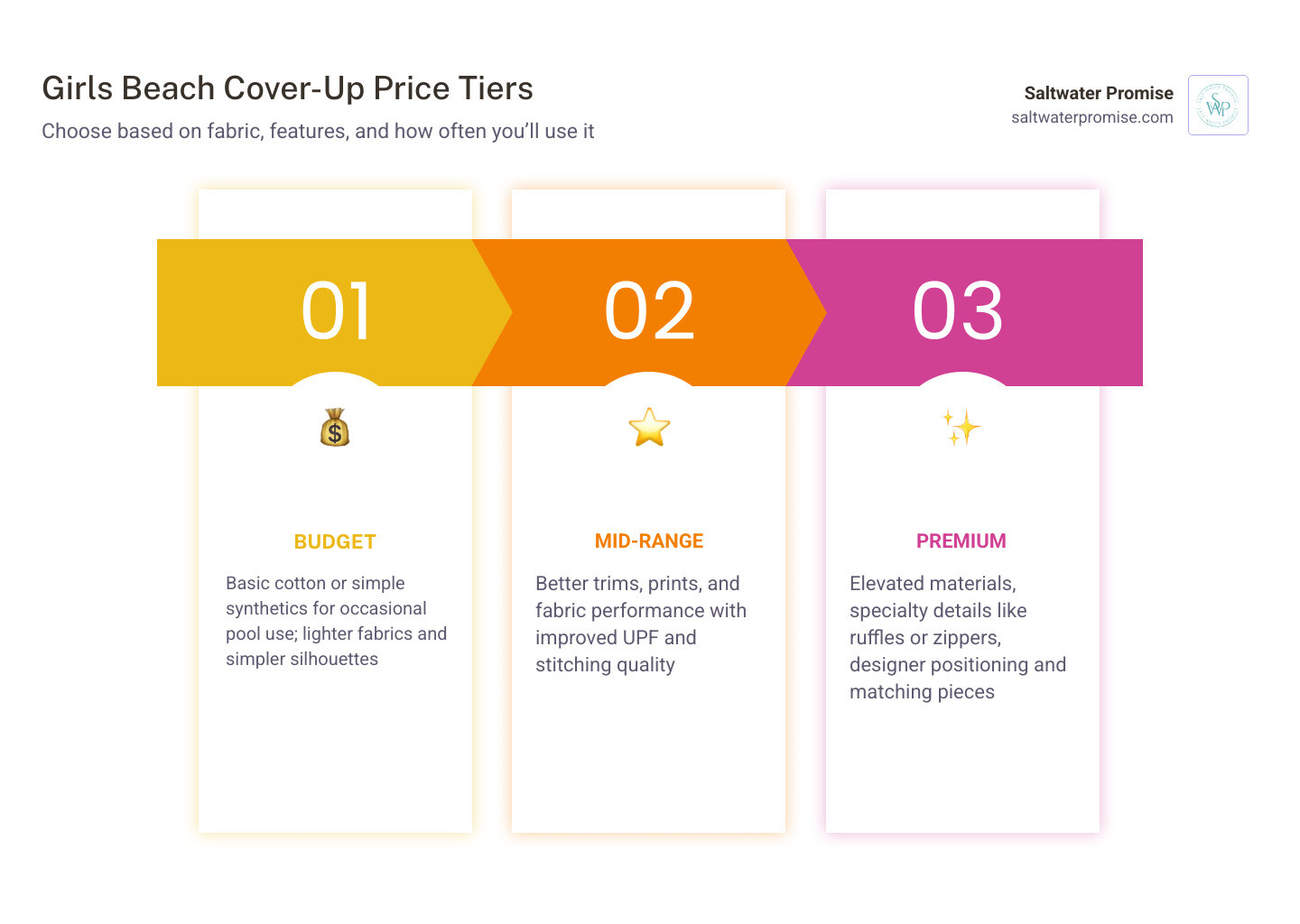
Girls’ cover-up pricing usually falls into three broad tiers:
- Budget: basic cotton or simple synthetic styles
- Mid-range: better trims, prints, and fabric performance
- Premium: elevated materials, specialty details, designer positioning
Price changes are usually tied to:
- Fabric quality
- UPF protection
- Construction and stitching
- Details like ruffles, embroidery, hoods, or zippers
- Matching collection pieces
- Seasonal demand
- Brand positioning
Budget vs premium: what changes in quality and design?
At the budget end, you often get simpler silhouettes and lighter fabrics. That is not automatically bad. A basic cotton dress cover-up can be perfect for occasional pool use.
As you move up in price, you are more likely to see:
- Better fabric recovery
- More consistent stitching
- Added UPF performance
- Nicer trims and finishing
- More durable color retention
- Coordinated swim collections
- More polished prints and design details
Premium styles may also be designed to transition better from beach to casual outing, which adds versatility.
Sale, clearance, and full-price shopping strategies
If value matters most, timing helps.
- Shop end-of-season clearance for next year’s size
- Look for early swim drops if you want the best selection
- Watch holiday sales for discounts on matching sets
- Buy off-season for stronger markdowns
- Compare full-price versus sale only after checking fabric and features
Clearance is great for basics, but if your child needs a specific size, UV-protective fabric, or a matching family look, full-price shopping can sometimes be worth it because the best styles sell out first.
Where parents shop for value and variety
Parents usually compare across:
- Brand websites
- Children’s boutiques
- Department stores
- Swimwear specialists
- Online seasonal collections
When comparing options, we suggest looking beyond the product photo. Check fabric content, care instructions, coverage, sleeve length, and whether the cover-up is designed for beach use specifically or is simply beach-adjacent. Those are not always the same thing.
Matching looks and styling ideas beyond the water
One of the easiest ways to get more wear out of a cover-up is to think of it as part of an outfit, not just a post-swim add-on. The right piece can go from shoreline to snack stop without looking like an afterthought.
Are matching family or coordinating swimwear options available?
Yes, many collections now include coordinated options such as:
- Mom-and-me prints
- Sibling color matching
- Shared tropical or stripe patterns
- Accessories in the same color story
- Swim-and-cover-up pairings
Coordinated looks are especially popular for vacations, family beach photos, and summer celebrations. Sometimes the match is exact, and sometimes it is more of a color story with similar shades or patterns across family members.
If you like the idea of a swim set that feels intentional rather than random, start with one print or one main color and build around it.
Simple ways to style a cover-up from shoreline to snack stop
These combinations work well:
- Cover-up dress + sandals + sun hat
- Tunic + swimsuit + lightweight shorts underneath
- Romper + slides + sunglasses
- Kimono layer + simple swimsuit + beach tote
- Zip-front cover-up + water shoes for swim lessons
For younger kids, comfort and speed matter most. We want the outfit to be easy enough that nobody is standing in a parking lot arguing about sleeves.
Cover-up outfit ideas inspired by broader beachwear trends
If you want more styling inspiration, broader beachwear categories can help spark ideas for older girls, tweens, or family-coordinated wardrobes.
Explore these guides:
- Beyond the Bikini: Find Your Perfect Beach Cover-Up Dress
- Cover Up in Style: Find Your Perfect Beach Dress, Skirt or Pant
- Wrap Up Your Look: Discover the Perfect Beach Skirt for Women
- From Palazzo to Mesh: Finding Your Perfect Beach Cover Pants
- Effortless Elegance: Your Guide to Beach Kimono Outfits
- From Maxi to Mini: A Colorful Guide to Beach Dresses
- From Maxi to Mini: The Ultimate Guide to Beach Chic Dresses
- Wave-Ready Wardrobe: Stylish Beach Dresses for Every Woman
Frequently Asked Questions about Girls beach coverup
What is the best Girls beach coverup for strong sun?
The best option for strong sun is usually a UPF 50+ cover-up with long sleeves, a tighter weave, and generous coverage through the shoulders and upper legs. Hooded tunics and rashguard dresses are especially useful. They help cover the areas that tend to get the most sun after swimming, when reapplying sunscreen can feel like a wrestling match.
Should a girls’ cover-up be loose or fitted?
Usually, slightly loose is best. A relaxed fit allows airflow, layers more comfortably over a wet swimsuit, and makes the cover-up easier to pull on and off. That said, it should not be so oversized that it twists, drags, or becomes a tripping hazard during active play. For running and climbing, a closer fit or romper style may be smarter.
Is cotton or quick-dry fabric better for beach cover-ups?
It depends on the activity.
- Cotton is best for softness, breathability, and casual comfort
- Quick-dry fabric is best for repeated swimming, active play, and faster drying
If your child spends most of the day in and out of the water, quick-dry fabric usually wins. If the cover-up is mainly for lounging, walking, or light pool use, cotton can be lovely.
Conclusion
The best girls beach coverup is the one that fits your child’s day as well as her style. That means choosing the right silhouette, the right fabric, and the right features for how she actually uses it, whether that is swim lessons, beach vacations, pool afternoons, or snack-bar pit stops.
We believe smart shopping starts with function first: sun protection, comfort, durability, and easy wear. From there, the fun part kicks in – colors, prints, ruffles, matching sets, and all the little details that make summer feel like summer.
At Salt Water Promise, we care deeply about creating beach apparel that supports both families and the coastlines we all love. Ocean-minded choices matter, and even something as simple as a cover-up can be part of a more thoughtful beach day.
If you’re ready to explore more youth beachwear, visit our youth collection.
Wear the wave. Be the change.


