


Pen-tastic Picks: Top Online Stores for Fountain Pen Enthusiasts
Why Fountain Pens Online Shopping Has Become Essential for Writing Enthusiasts
Fountain pens online stores have transformed how enthusiasts find and purchase these timeless writing instruments. For beginners and collectors alike, the right online retailer is key.
Top Online Fountain Pen Stores to Consider:
- JetPens – Extensive beginner selection and specialized guides.
- Goldspot Pens – Comprehensive “Fountain Pen University” with educational resources.
- Goulet Pens – Thousands of options with detailed sorting and comparison tools.
- Cult Pens – European retailer featuring brands like LAMY, Kaweco, and Pelikan.
- Anderson Pens – Specialty retailer with ink sample programs and vintage collections.
The fountain pen market is seeing a remarkable resurgence. In a digital age, many are refinding the superior writing performance, uniqueness, and status of fountain pens. They offer a smoother ink flow, varied line widths, and a more comfortable grip than ballpoints.
Shopping online provides access to hundreds of brands, from Japanese makers like Pilot to German manufacturers like LAMY. You’ll find detailed specifications on nib sizes, filling mechanisms, and prices ranging from under $50 to over $500.
At Saltwater Promise, we value mindful, intentional choices—whether it’s sustainable apparel or finding fountain pens online that make writing more meaningful. Our commitment to quality extends to hobbies that connect us to craftsmanship and tradition.
What to Look for When Shopping for Fountain Pens Online
Starting the journey to find the perfect fountain pen is an exciting adventure, and the online world opens up a vast ocean of possibilities. When we dive into fountain pens online, we’re seeking an experience—a tool that resonates with our personal style. A great online store understands this, offering guidance, community, and support.
The best online retailers distinguish themselves through several key attributes. First, a wide selection is paramount, with a diverse range of brands, models, and price points. For instance, JetPens boasts over 214 fountain pen products, with an impressive 1419 products for beginners, ensuring there’s always something new to find for any enthusiast.
Second, detailed product filters are essential. Top shops provide filters for everything from nib size (extra-fine to specialty nibs) and material (steel or gold) to filling mechanism (cartridge, piston, etc.), material, color, and price. This allows us to quickly find pens that match our exact preferences.
Beyond product volume and filters, the best stores for fountain pens online also act as educational hubs. They offer a wealth of educational content through guides, articles, and videos. Goldspot Pens, for example, features a “Fountain Pen University” with guides on how to fill, clean, and write with a fountain pen. JetPens offers five dedicated guides, helping us make informed decisions.
Finally, trust is crucial. We look for stores with ample customer reviews, like JetPens which highlights “10,000 reviews by actual customers,” offering real-world insights. Clear shipping policies, including free shipping offers (many offer it on orders over $75), and transparent return policies provide peace of mind for a smooth shopping experience.
Key Features of a Top-Tier Online Pen Shop
When hunting for our next writing instrument, certain features lift an online shop from good to great. These are essential tools that improve our shopping experience.
Here’s what we consider must-haves:
- Comprehensive Product Comparison Tools: A good comparison tool lets us line up specifications, features, and ratings side-by-side, making decisions clearer. JetPens is noted for offering this feature.
- Ink Sample Programs: Committing to a full bottle of ink can be daunting. Shops like Anderson Pens and Goldspot offer ink samples, allowing us to test various hues and properties before buying a larger quantity.
- Detailed Pen Cleaning and Maintenance Guides: Proper care ensures our pens’ longevity. The best stores empower us to maintain them, like Goldspot’s “How to Clean a Fountain Pen” guide.
- Wide Brand Variety: A top-tier store showcases a curated selection of brands, from giants like Parker (135 years of history) and Pelikan (since 1838) to innovators like TWSBI, Lamy, and Sailor.
- Extensive Accessory Availability: A fountain pen is just the beginning. We also need inks, converters, pen cases, and high-quality paper. A shop that offers a complete ecosystem is ideal.
Understanding Pricing and Value
The world of fountain pens online offers a vast range of prices, from budget-friendly options to exquisite luxury pieces. Understanding what influences these price tags helps us appreciate the value behind each pen.
Prices can start as low as $26 for a LAMY abc Fountain Pen and soar to over $500 for high-end models. Goldspot categorizes its pens into clear price brackets (under $100, $100-$300, etc.), making it easy to shop within a budget.
Several factors contribute to a pen’s cost:
- Materials: The body can be made from durable plastics, metals (aluminum, brass, titanium), or precious woods. Nibs are typically stainless steel (more affordable) or gold (14k, 18k, 21k), which command higher prices for their craftsmanship and superior writing feel.
- Craftsmanship: Some pens are mass-produced, while others involve intricate handcrafting. Techniques like Maki-e, Raden, and Urushi—ancient Japanese art forms—can transform a pen into a unique work of art, significantly increasing its value.
- Brand Heritage and Innovation: Established brands with a long history of quality and innovation, like Parker or Pelikan, often carry a premium.
- Limited Editions and Collectibility: Many brands release limited or special edition pens in small quantities, making them highly sought after by collectors and driving up their price.
Value isn’t just the price tag; it’s about the joy and performance we get from our writing instrument. A $50 pen can bring as much satisfaction as a $500 treasured heirloom.
A Beginner’s Guide to Buying Your First Fountain Pen
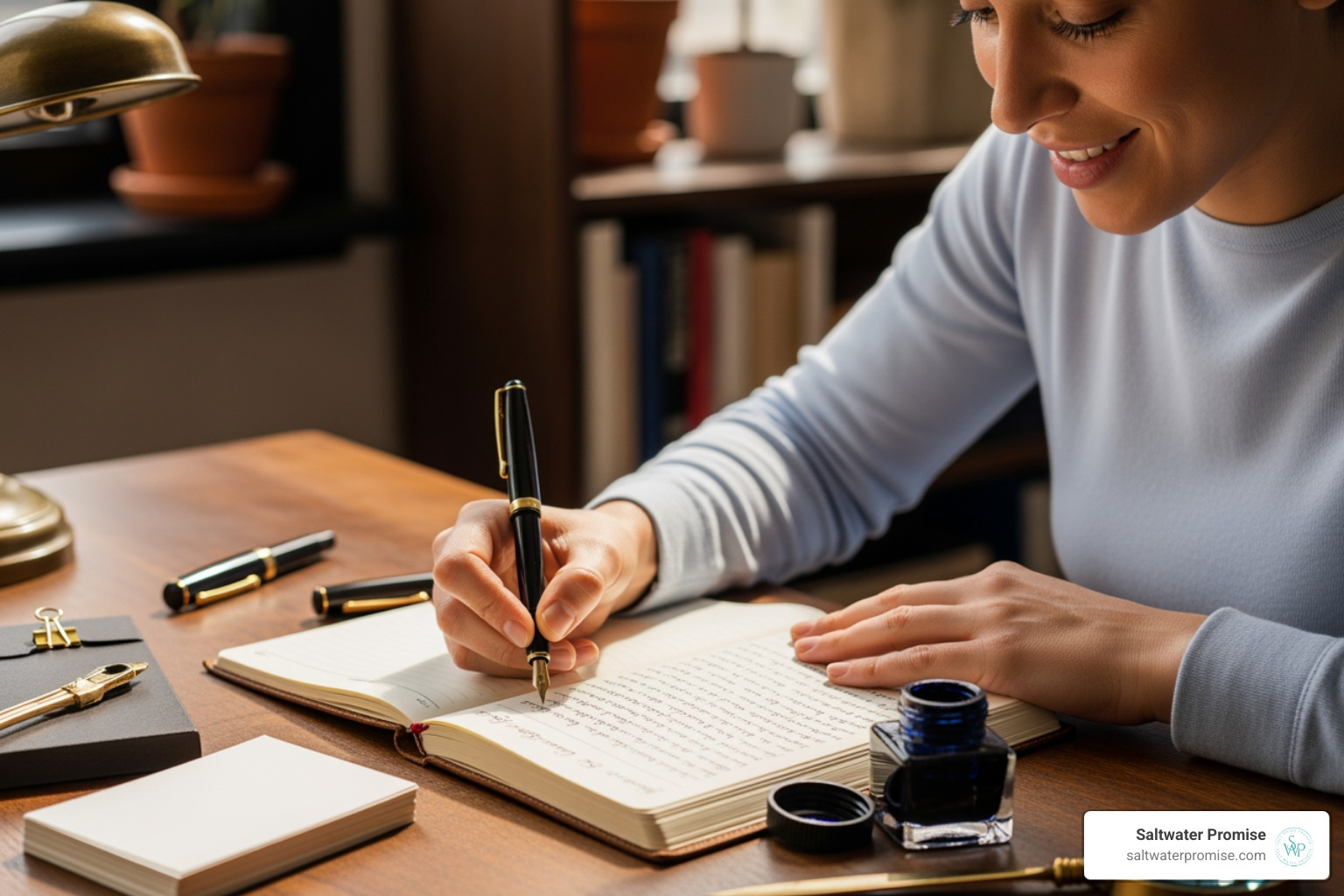
For those new to fountain pens online, the sheer variety can feel daunting. But fear not! We believe everyone deserves to experience the unique pleasure of writing with a fountain pen.
One of the first questions is, “Why a fountain pen over a ballpoint?” The advantages are numerous. Fountain pens offer superior writing performance with an incredibly smooth glide, reducing hand fatigue. Unlike ballpoints, which require pressure, fountain pens use gravity and capillary action, allowing ink to flow with minimal effort. This results in an unparalleled writing experience, with beautiful line variations and access to a diverse palette of ink colors.
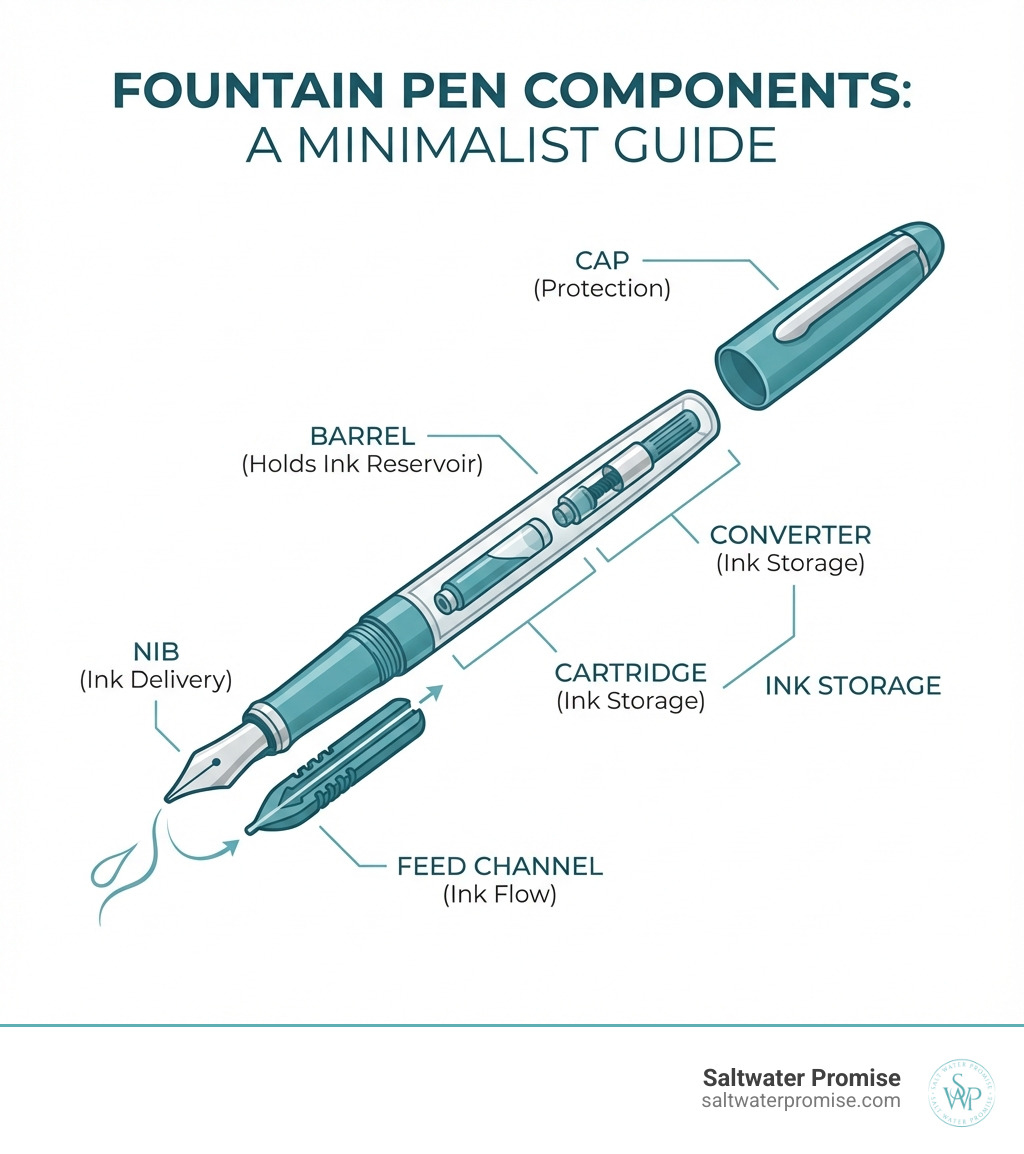
To understand our new companions, let’s revisit the key components:
- Nib: The metal tip that touches the paper.
- Feed: The channel that regulates ink flow to the nib.
- Barrel: The main body of the pen, housing the ink.
- Cap: Protects the nib from drying out.
- Ink Reservoir: A cartridge or converter that holds the ink.
How do they work? Ink flows from the reservoir, through the feed, and down to the nib’s tip by capillary action. When the nib touches paper, ink is drawn out, creating a smooth, continuous line.
How to choose the right fountain pen for beginners online
Choosing your first fountain pen should be exciting, not overwhelming. The goal is to find a reliable, easy-to-use pen that’s a joy to write with, without breaking the bank.
Here are our top recommendations for beginners:
- Recommended Starter Models: Pens like the Lamy Safari and the Pilot Metropolitan are excellent choices. Goldspot recommends them for their affordability and reliability. The Lamy Safari is celebrated for its ergonomic grip, which guides your fingers into the correct position. The LAMY abc Fountain Pen, starting at just $26, is another budget-friendly option.
- Affordability and Reliability: For a first pen, you don’t need to splurge. Many high-quality pens under $50 offer a fantastic writing experience. Focus on models known for consistent ink flow and durable construction.
- Cartridge/Converter Systems: We suggest starting with pens that accept standard cartridges or come with a converter. Cartridges are convenient and mess-free. Converters let you use the vast array of bottled inks.
- Durable Nibs: Most beginner pens come with sturdy stainless steel nibs. They are resilient and forgiving, perfect for learning.
- Ergonomic Grip: A comfortable grip is essential. Pens with a triangular grip, like the Lamy Safari, can be particularly helpful for new users.
Decoding Nib Sizes and Materials
The nib is arguably the most crucial part of a fountain pen, dictating line width and writing feel. Understanding nibs is key to finding your perfect match online.
Here’s a quick guide to common nib sizes:
| Nib Size | Description | Best For |
|---|---|---|
| Extra Fine (EF) | Produces a very thin, precise line. | Small handwriting, detailed notes, drawing fine lines. |
| Fine (F) | A thin but smooth line, slightly broader than EF. | Everyday writing, journaling, general note-taking. |
| Medium (M) | A smooth, versatile line, broader than fine. | Signatures, general writing, often the smoothest experience. |
| Broad (B) | A thick, bold line. | Signatures, expressive writing, showcasing ink properties like shading. |
Beyond these, Stub and Italic nibs have a flat tip that creates line variation—thicker vertical strokes and thinner horizontal strokes—adding elegance to your writing.
Regarding nib materials, the two main types are steel and gold.
- Steel Nibs: Durable, affordable, and offer a consistent writing experience. They are excellent for everyday use and found on most beginner and mid-range pens.
- Gold Nibs: Often found on premium pens, gold nibs (14k, 18k) are known for their flexibility, which can lead to a softer, springier, and smoother feel. They can offer subtle line variation with pressure and tend to conform to your writing style over time.
The choice between steel and gold often comes down to personal preference and budget.
Filling Systems Made Simple
Fountain pens have various ink filling systems, each offering a different balance of convenience and ink capacity.
Cartridge System:
- How it works: Small, disposable, pre-filled ink tubes. Simply insert a new one when the old one is empty.
- Pros: Very convenient, mess-free, and great for travel.
- Cons: Limited color choice, can be more expensive long-term, generates plastic waste.
Converter System:
- How it works: A reusable, piston-operated device that fits in a cartridge pen, allowing it to draw ink from a bottle.
- Pros: Access to endless bottled ink colors, economical, and eco-friendlier.
- Cons: Smaller ink capacity, requires carrying an ink bottle for refills.
Piston Filler:
- How it works: A system integrated into the pen barrel. A knob at the end operates a piston to draw ink directly into a large internal reservoir.
- Pros: Very high ink capacity and a satisfying filling experience.
- Cons: Can be more challenging to clean thoroughly.
Eyedropper Filler:
- How it works: The entire barrel is the ink reservoir, filled directly with an eyedropper.
- Pros: Extremely high ink capacity.
- Cons: Can be prone to “burping” (expelling ink) when the ink level is low or with temperature changes.
Vacuum Filler:
- How it works: A plunger creates a vacuum in the barrel, which is released to rapidly draw a large amount of ink into the reservoir.
- Pros: Very high ink capacity, often fills in a single stroke.
- Cons: More complex mechanism, usually found on more expensive pens.
For beginners, cartridges and converters offer the most straightforward entry into the hobby.
Beyond the Basics: Exploring Inks, Paper, and Maintenance

Once you’ve chosen your perfect fountain pen, the journey truly begins. The magic of fountain pens online extends to a vibrant ecosystem of inks and a discerning appreciation for paper, all underpinned by proper maintenance. These elements are integral to enhancing the writing experience and ensuring your tools last a lifetime.
The interplay between ink, paper, and pen is what makes fountain pen writing so satisfying. The right ink can transform your writing’s character, while the right paper prevents common issues and brings out the best in both pen and ink. Proper pen care is a mindful act that contributes to longevity and sustainable enjoyment.
If you are curious about how writing tools evolved into the modern fountain pen, you can also explore this brief history of writing instruments.
Finding the best inks and paper for fountain pens online
The world of fountain pen inks is an artist’s palette, brimming with an astonishing array of colors and properties.
Types of Fountain Pen Ink:
- Bottled Inks: The most common form, offering the widest selection of colors and special properties.
- Ink Cartridges: Pre-filled and convenient, ideal for travel but with a more limited color range.
Modern inks also come with exciting features:
- Shading Inks: Display lighter and darker tones within a single stroke.
- Sheening Inks: Leave behind a metallic sheen on the edges of your writing on smooth paper.
- Shimmer Inks: Contain fine glitter particles that add sparkle.
- Scented Inks: Infused with subtle fragrances for a unique sensory experience.
- Water-Resistant & Pigmented Inks: Important for archival purposes or withstanding spills, though pigmented inks require more diligent cleaning.
The importance of paper quality cannot be overstated. The wrong paper can lead to frustrating issues like feathering (blurry lines), bleed-through (ink soaking through), and show-through (ink visible from the back).
High-quality, fountain-pen-friendly paper (from brands like Rhodia, Leuchtturm1917, and Clairefontaine) is smoother and less absorbent. Many online stores offer “Fountain Pen Notebooks” designed to showcase inks beautifully and prevent these problems.
How to Properly Maintain and Clean a Fountain Pen
Just as we care for our coastlines at Saltwater Promise, we must care for our fountain pens to ensure their longevity. Regular cleaning is a simple but vital ritual.
Here’s a step-by-step guide to cleaning your pen:
- When to Clean: Clean your pen when changing ink colors, if the ink flow is inconsistent, or before storing it for an extended period.
- Disassemble: Gently remove the converter or empty cartridge. For piston fillers, empty the remaining ink.
- Flush with Water: Using a glass of cool or lukewarm water (never hot!), flush the pen. For cartridge/converter pens, use the converter to repeatedly draw water in and expel it until it runs clear. For piston fillers, operate the piston to do the same with the barrel.
- Rinse: Hold the nib and section under a gentle stream of cool water until no more ink appears.
- Dry: Gently blot the nib and feed with a lint-free cloth or paper towel. Allow all parts to air dry completely, preferably overnight, before re-inking.
- Troubleshooting: If your pen isn’t writing, a thorough cleaning often resolves common issues like a dry nib or clogged feed. Goldspot offers a “Fountain Pen Not Writing?” guide for more tips. Basic nib tuning, like checking tine alignment with a loupe, can also help, but advanced adjustments are best left to experts.
By following these simple steps, you’ll ensure your fountain pens remain reliable companions. For a broader understanding of how these incredible tools came to be, you can explore a brief history of writing instruments.
Frequently Asked Questions about Fountain Pens
We often receive questions from those curious about fountain pens. Let’s address some of the most common inquiries.
What are the advantages of using a fountain pen?
The allure of the fountain pen is both practical and personal:
- Ergonomics and Reduced Hand Fatigue: Fountain pens write with minimal effort, relying on gravity and capillary action. This reduces strain on the hand and wrist, making long writing sessions more comfortable.
- Expressive Writing: With various nib sizes and a vast array of ink colors, fountain pens enable a more expressive and personalized writing style.
- Connection to the Writing Process: Using a fountain pen is an intentional act that encourages us to slow down and engage more deeply with our words. It transforms writing into a mindful pleasure.
- Sustainability: By using bottled ink and reusable converters, we significantly reduce the waste from disposable pens, aligning with our Saltwater Promise values of protecting the environment.
What are the best fountain pens for calligraphy or drawing?
For artists, the key is selecting pens and nibs that offer line variation and consistent ink flow.
- Flex Nibs: These nibs spread under pressure, creating thin lines with a light touch and broad lines with more pressure, essential for many calligraphy styles.
- Stub and Italic Nibs: These have a flat tip that produces broad downstrokes and thin cross-strokes, creating calligraphic lettering with ease.
- Consistent Ink Flow: A reliable ink flow is critical for artistic use to avoid skips or dry starts during intricate line work.
- Specific Pen Features for Artists: Some brands, like Pelikan, offer specialized calligraphy pens. Demonstrator pens (with clear barrels) are also popular as they allow artists to monitor the ink level.
What is the history of the fountain pen?
The fountain pen’s journey is a fascinating tale of innovation. Before its invention, writers used quills and dip pens, which required constant, messy re-dipping. As Goldspot notes, fountain pens replaced these as the instrument of choice in the “golden age of fine writing.”
The quest for a self-contained ink reservoir led to numerous patents throughout the 17th to 19th centuries, but early designs struggled with leaks and inconsistent flow. Key innovations in ink feeds, filling systems, and durable materials eventually solved these problems.
By the late 19th and early 20th centuries, the fountain pen entered its “Golden Age.” Companies like Parker (with its 135-year history) and Pelikan (manufacturing since 1838) were at the forefront, introducing designs like Parker’s “Lucky Curve” feed and Pelikan’s differential piston mechanism.
Today, the fountain pen is still desired for its superior writing performance, uniqueness, and status—a testament to timeless design and the enduring desire for a beautiful writing experience.
Conclusion
Our exploration into fountain pens online reveals a rich hobby steeped in history, craftsmanship, and personal expression. From understanding the nuances of nibs and inks to appreciating the importance of paper and maintenance, we hope this guide empowers you to start your own writing journey with confidence.
The act of choosing and writing with a fountain pen is inherently mindful. It’s a deliberate pause in our digital lives, an invitation to connect with our thoughts in a tangible way. This personal journey, whether collecting pens or finding one perfect daily writer, becomes a cherished ritual.
At Saltwater Promise, we believe in intentional living—making choices that reflect our values. Just as we strive to protect our oceans through eco-conscious apparel, we encourage you to find joy in mindful hobbies that celebrate craftsmanship and sustainability. The pleasure of a fountain pen is one such intentional act.
We invite you to wear the wave and be the change, both in your commitment to our planet and in your pursuit of hobbies that enrich your life.
Start your own journey of intentional living with our collections


