


Cheat Sheet to Eco-Conscious Beach Brands Supporting Ocean Conservation
What Materials and Certifications Define True Eco-Conscious Beachwear?
When we shop for beachwear, it is easy to get swept up in beautiful prints and flattering cuts. However, true sustainability starts at the molecular level—with the fibers woven into our garments. Traditional swimwear relies heavily on virgin synthetics like polyester and nylon. These petroleum-based materials require immense energy to produce, release high levels of carbon emissions, and can take hundreds of years to decompose.
Fortunately, the textile industry is undergoing a massive shift. By choosing recycled alternatives over virgin plastics, we can actively divert waste from landfills and marine environments. To ensure a brand’s claims are legitimate, we must look for verified third-party certifications rather than taking marketing buzzwords at face value.
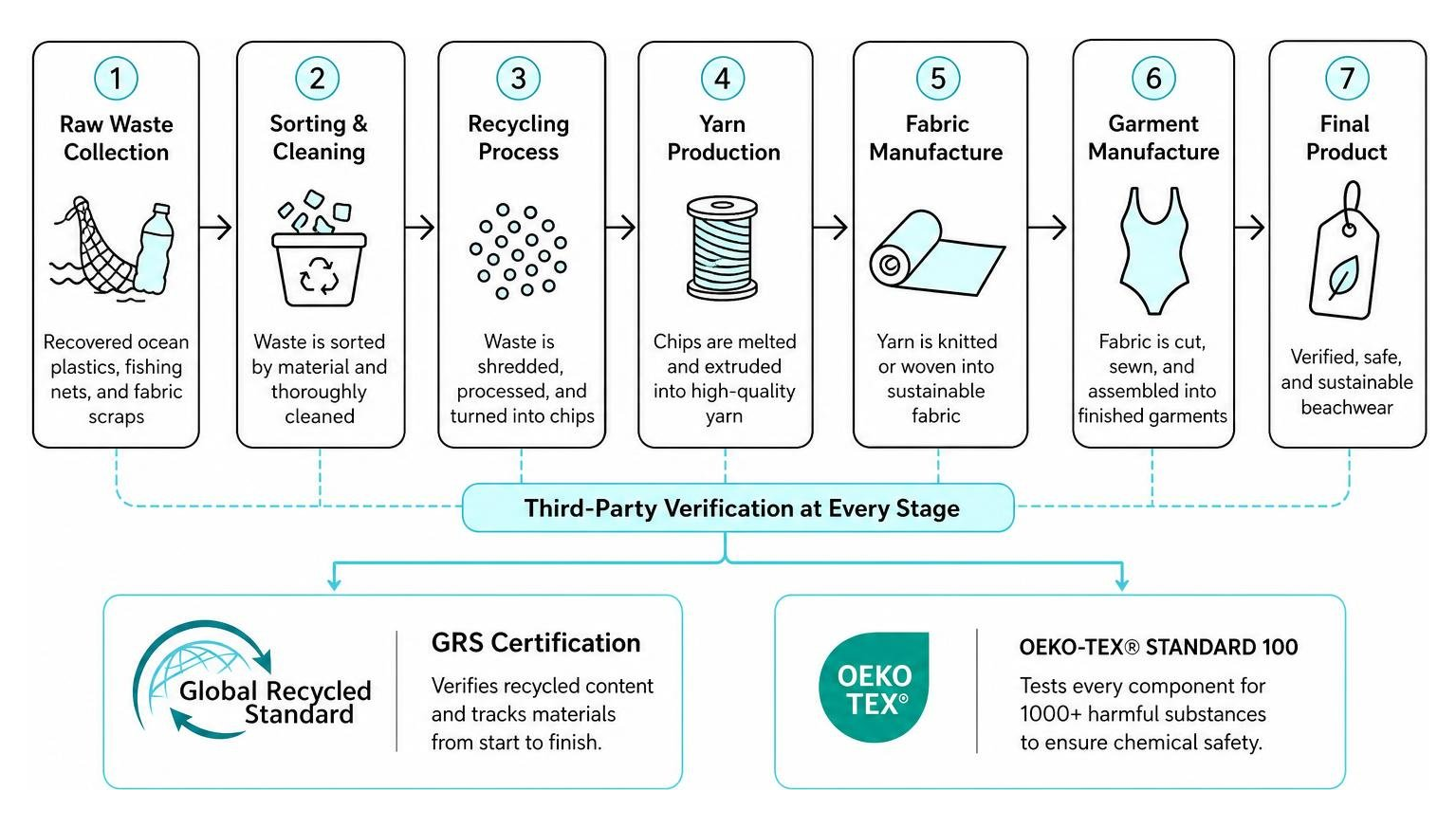
One of the most important standards to look for is the Global Recycled Standard (GRS). The GRS verifies the exact percentage of recycled content in a fabric and tracks it from the initial recycler to the finished garment. This certification also enforces strict social and environmental requirements, ensuring safe working conditions and the minimization of harmful chemical use during processing.
Equally critical is the OEKO-TEX® STANDARD 100 certification. When a beach garment carries this label, it means every component—from the thread and fabric to the zippers and dyes—has been rigorously tested for over 1,000 harmful substances, including dangerous chemicals like BPA, formaldehyde, and PFAS (per- and polyfluoroalkyl substances). This ensures the clothing is completely safe for your skin and won’t leach toxic chemicals into the water when you swim.
Beyond chemical safety, eco-conscious beachwear should protect both your body and the marine environment. Selecting garments with a certified UPF 50+ rating is a highly effective way to practice ocean-friendly sun protection. UPF 50+ fabric blocks more than 98% of harmful UVA and UVB rays. By wearing sun-safe clothing, you drastically reduce your reliance on chemical sunscreens. Traditional sunscreens often contain active ingredients like oxybenzone and octinoxate, which wash off in the water and contribute to coral bleaching and marine toxicity.
Embracing these standards is a core part of The Recycled Material Fashion Revolution, where circular design principles turn existing waste into high-performance apparel.
Regenerated Nylon and Polyester
The two primary building blocks of sustainable swimwear are regenerated nylon and recycled polyester. Each offers unique environmental benefits while delivering the performance active beachgoers demand:
- Econyl® Regenerated Nylon: This innovative material is created by recovering nylon waste—such as abandoned ghost fishing nets, fabric scraps, and industrial plastics—and transforming it into a clean, high-performance yarn. Econyl is chemically identical to virgin nylon, meaning it can be recycled, recreated, and remolded infinitely without ever losing its original quality or strength. It provides exceptional stretch, muscle compression, and chlorine resistance.
- Repreve® RPET Recycled Polyester: Repreve is a world-leading brand of recycled fiber made from post-consumer plastic bottles. Instead of allowing plastic waste to pollute our coastlines, Repreve collects, washes, shreds, and melts these bottles into high-quality resin pellets, which are then spun into polyester yarn. This fabric is incredibly durable, quick-drying, and resistant to fading from salt water and chlorine.
Eco-Friendly Printing and Manufacturing
The sustainability of a garment is also defined by how its patterns are applied and how the factory workers are treated. Traditional textile dyeing is notoriously water-intensive and often results in toxic chemical runoff entering local waterways.
To combat this, leading eco-conscious brands utilize heat transfer sublimation printing. This is a highly efficient, waterless printing technique. The dyes are printed onto a carrier paper and then transferred into the synthetic fibers using heat and pressure. Because it requires no water, it completely eliminates dye runoff, protecting local aquatic ecosystems from chemical pollution.
Furthermore, true sustainability cannot exist without ethical manufacturing. Responsible brands partner exclusively with facilities that guarantee fair wages, safe working conditions, and reasonable working hours. Many of these factories utilize renewable energy sources and implement zero-waste cutting techniques to minimize fabric scraps.
How Can Consumers Verify a Brand’s Commitment to Ocean Conservation?
As eco-friendly fashion grows in popularity, so does greenwashing—the practice of making misleading or exaggerated environmental claims. To protect our oceans and make our dollars count, we must learn how to separate genuine conservation efforts from clever marketing.
| Marketing Claim (Greenwashing) | Verified Proof (True Sustainability) |
|---|---|
| “Made from ocean-safe materials” | GRS (Global Recycled Standard) or OEKO-TEX® certified fabrics |
| “We support ocean cleanup projects” | Official partnership with registered non-profits (e.g., CleanHub, 1% for the Planet) |
| “Eco-friendly and ethically made” | Certified B-Corporation status, transparent factory audits, and living wage guarantees |
| “Every purchase helps clean the sea” | Publicly published impact reports detailing exact donation metrics or pounds of trash removed |
To verify a brand’s commitment, look for recognized certifications that demand structural accountability. Certified B-Corporations) are legally required to balance purpose and profit. These companies undergo a rigorous assessment that evaluates their impact on their workers, customers, community, and the environment.
Another powerful indicator is a brand’s commitment to Plastic Neutrality. Brands that partner with verified organizations like CleanHub actively fund the recovery of ocean-bound plastic. CleanHub builds dedicated waste management systems in coastal communities that lack proper infrastructure, stopping plastic waste before it ever has a chance to enter our oceans.
Additionally, look for membership in verified giving networks like 1% for the Planet. Members pledge to donate at least 1% of their annual sales directly to approved environmental non-profits, ensuring that financial contributions are legally binding and independently audited. Supporting these verified pathways is a wonderful way to amplify the impact of local Beach Clean Up Initiatives.
Tracking Direct Donations and Scientific Partnerships
Genuinely committed brands do not hide behind vague promises; they partner directly with registered marine research and conservation organizations. For example, some brands dedicate specific product lines to individual marine species and donate a set percentage of sales (often 5% to 10%) directly to the scientists studying them.
When researching a brand, check their website for a dedicated impact page. Transparent brands publish annual reports detailing their exact contributions—whether that means donating hundreds of thousands of dollars to marine science or funding physical debris removal. By aligning our purchases with verified conservationists, we are directly Making a Splash for Marine Life Protection.
Which Brands Offer the Best Performance and Style for Active Ocean Adventures?

For women who love surfing, diving, paddleboarding, and swimming, beachwear must be highly functional. It needs to stay securely in place, resist wear and tear from surfboard wax and salt water, and provide freedom of movement. Historically, active women had to choose between high-performance athletic gear and stylish, eco-friendly designs. Today, premium sustainable brands are proving we can have both.
When shopping for active water wear, look for thoughtful design details:
- High-neck cuts and secure front zippers that keep swimsuits in place during heavy wipeouts.
- Wax-resistant, ribbed fabrics that prevent surfboard wax from staining or wearing down the material.
- Seamless construction to eliminate chafing during long paddling sessions.
These performance features ensure that your gear lasts for years, reducing the need for frequent replacements. Investing in versatile, durable pieces is the foundation of finding Sustainable Swimwear Women Actually Want to Wear.
High-Performance One-Pieces and Bikinis
One of the smartest ways to practice sustainable consumption is by choosing multi-functional, reversible swimwear. Many top-tier eco-conscious brands design double-sided bikinis and one-pieces, giving you two distinct looks in a single garment. This simple design feature halves the raw materials needed for your wardrobe and maximizes your packing efficiency when traveling.
These high-performance suits are engineered using GRS-certified recycled nylon and elastane blends. This specific material composition provides excellent shape retention, meaning your swimsuit won’t stretch out or sag, even after hundreds of hours in salt water and sun.
Sun-Safe Rashguards and Leggings
For extended days on the water, sun-safe rashguards and swim leggings are indispensable. Offering certified UPF 50+ protection, these garments act as a physical shield against the sun, jellyfish stings, and cool ocean breezes.
Many of these activewear lines feature striking, ocean-inspired patterns. These designs are often inspired by specific marine species, such as the intricate spot patterns of whale sharks, the stark contrast of orcas, or the vibrant textures of coral reefs. Wearing these eye-catching prints is a fantastic way to celebrate marine biology and spark natural conversations about ocean conservation with fellow beachgoers.
Where Can You Find Versatile Beach Cover-Ups and Lifestyle Apparel That Support the Sea?
A complete day at the beach involves more than just swimming; it includes the journey to the shoreline, beachside lunches, and sunset walks. To build a truly eco-conscious coastal wardrobe, we must look beyond swimwear to our cover-ups, dresses, and casual lifestyle apparel.
The fast-fashion industry thrives on cheap, synthetic cover-ups that degrade quickly and contribute to global textile waste. By shifting our focus to high-quality, natural, and upcycled fabrics, we can create a beautiful, long-lasting beach wardrobe that respects the planet.
At Salt Water Promise, we design our eco-conscious beach apparel to bridge the gap between effortless coastal style and active preservation. Our pieces are crafted to move seamlessly from a morning walk along the shoreline to a relaxed evening with friends, keeping you comfortable while carrying a deeper message of ocean conservation. Exploring these versatile options helps you find Beyond the Bikini: Find Your Perfect Beach Cover-Up Dress.
Effortless Coastal Cover-Ups and Dresses
When choosing cover-ups and dresses, prioritize highly breathable, natural fibers like organic cotton, linen, and Tencel. Unlike conventional cotton—which relies heavily on synthetic pesticides and massive amounts of water—organic cotton is grown using natural farming methods that protect soil health and local water systems.
These natural materials are incredibly soft on sun-exposed skin, naturally biodegradable, and highly durable. By investing in timeless, high-quality cover-ups, you resist the rapid cycle of fast fashion and keep low-quality garments out of landfills. This mindful approach to style is explored further in From Reefs to Racks: Exploring Ocean-Inspired Fashion & Sustainable Apparel.
Ocean-Inspired Graphic Tees and Loungewear
For laid-back coastal living, a classic graphic tee or cozy sweatshirt is a beach-bag essential. Choosing lifestyle apparel with ocean-inspired graphics allows you to wear your values on your sleeve—literally. These designs serve as powerful visual reminders of the beauty of marine life and the urgent need to protect it.
We love using our platform to spark these vital conversations. When you wear apparel that celebrates the sea, you become an active ambassador for conservation, helping to raise awareness in your own community. You can explore how everyday fashion can make a positive wave in Seas the Day with Ocean-Inspired Fashion.
How Do Sustainable Brands Handle Packaging and End-of-Life Product Care?
A brand’s environmental responsibility should extend far beyond the garment itself. The way a product is packaged, shipped, and cared for at the end of its life cycle plays a massive role in its overall ecological footprint.
When ordering online, pay close attention to the packaging. Truly sustainable brands have eliminated single-use plastic mailers and individual polybags. Instead, they utilize minimalist, FSC-certified recycled paper boxes, compostable mailers made from cornstarch, and biodegradable tissue paper.
Furthermore, some eco-conscious brands are changing how they approach shipping. Rather than hiding shipping costs in inflated product prices and offering “free shipping”—which often encourages impulsive, high-return ordering—they charge an honest, flat-rate shipping fee. This encourages consumers to order intentionally, significantly reducing the carbon emissions associated with unnecessary return shipping. This holistic approach to sustainability is a cornerstone of choosing Ocean-Friendly Clothing.
Once a garment is in your hands, how you care for it matters. Synthetic fabrics, including recycled nylon and polyester, shed tiny plastic fibers called microplastics when washed. To minimize this impact, follow these best practices for washing your swimwear and activewear:
- Hand Wash in Cold Water: Gently hand washing your swimwear in cold water with a mild, ocean-safe detergent is the best way to clean it. This reduces friction, which prevents microplastic shedding and preserves fabric elasticity.
- Use a Specialized Wash Bag: If you must use a washing machine, place your synthetic garments inside a microplastic-filtering wash bag (such as a Guppyfriend bag). This bag captures loose microfibers before they can escape into the wastewater system.
- Hang Dry in the Shade: Never put your swimwear or activewear in a tumble dryer. The heat and tumbling motion degrade the elastane fibers and accelerate microplastic shedding. Instead, gently squeeze out excess water and hang your garments to dry in the shade, away from direct sunlight which can fade natural dyes.
Circular Economy and Take-Back Programs
To truly close the loop on fashion waste, we must consider what happens to our clothing when it can no longer be worn. Forward-thinking brands are embracing circular economy models by integrating resale, trade-in, or recycling programs directly into their digital platforms.
Through these initiatives, consumers can send back worn-out synthetic beachwear to be properly recycled into new industrial materials or clothing, keeping synthetic fibers out of our landfills and oceans.
Frequently Asked Questions About Eco-Conscious Beach Clothing
How does buying recycled plastic swimwear help the ocean if it still sheds microplastics?
While it is true that recycled synthetics can still shed microplastics during washing, utilizing these materials is still a major environmental victory. Manufacturing swimwear from recycled plastics (like Econyl or Repreve) diverts existing waste from our coastlines and landfills, reduces our reliance on crude oil extraction, and requires significantly less energy and water than producing virgin synthetics.
To address the microplastic issue, consumers can easily minimize shedding by hand washing their garments in cold water, using specialized microfiber-catching wash bags, and always air-drying their beachwear.
What are the most trustworthy certifications to look for when shopping for sustainable beachwear?
To ensure you are supporting a genuinely eco-conscious brand, look for these key certifications:
- Global Recycled Standard (GRS): Verifies the presence and traceability of recycled materials.
- OEKO-TEX® STANDARD 100: Guarantees the finished product is free from harmful chemicals and toxins.
- Certified B-Corporation: Proves the brand meets rigorous, legally binding standards of social and environmental performance.
- 1% for the Planet: Verifies that the brand donates at least 1% of its annual sales directly to environmental non-profits.
Where can I buy high-quality beach clothing that directly funds ocean conservation?
You can find beautiful, purpose-driven coastal apparel directly through specialized conservation-minded brands. At Salt Water Promise, we craft comfortable, versatile beachwear designed to move with you from shoreline adventures to laid-back coastal living, while actively supporting beach preservation and marine awareness initiatives. Explore our curated collection of ocean-friendly styles at the Salt Water Promise Shop.
Conclusion
Every time we choose where to buy our beachwear, we are casting a vote for the kind of world we want to live in. By shifting our support toward brands that prioritize GRS-certified recycled materials, chemical-free fabrics, plastic-neutral packaging, and direct funding for marine science, we can drive systemic change across the fashion industry.
When you choose high-quality, eco-conscious beachwear, you are investing in pieces that are built to last, reducing waste, and directly supporting the scientists, advocates, and volunteers working to protect our seas.
At Salt Water Promise, we invite you to stand with us in this commitment. Let’s celebrate the beauty of our coastlines, protect the marine life we love, and leave our beaches better than we found them. To discover more about how you can style your coastal lifestyle with purpose, check out our guide on Oceanic Threads: Where to Buy Save the Ocean Apparel.
Wear the wave. Be the change.


