


Beyond the Bottle: Innovative Uses for Recycled Ocean Plastic
Why Recycled Ocean Plastic Matters for Our Oceans and Our Future
Recycled ocean plastic is transforming how we think about waste, fashion, and ocean conservation. Here’s what you need to know:
What is Recycled Ocean Plastic?
- Ocean-bound plastic: Waste collected from coastlines, beaches, and coastal communities before it reaches the ocean
- Ocean-recovered plastic: Material retrieved directly from marine environments, including fishing gear and floating debris
- Key difference from regular recycled plastic: Sourced specifically from areas threatening marine ecosystems, with verified traceability and certifications
Common Sources:
- Lost or discarded fishing gear (called “ghost gear”) — the most abundant form of ocean plastic
- Plastic bottles and containers from coastal areas
- Marine industrial equipment and packaging
- Shoreline cleanup collections
End Products:
- Apparel and textiles (polyester yarn for clothing, bags, shoes)
- Consumer goods (watches, furniture, electronics)
- Industrial applications (automotive parts, construction materials, 3D printing filament)
Lost or discarded fishing gear — known as “ghost gear” — represents the most lethal threat to marine life, with 640,000 tonnes added to our oceans every year. These high-quality plastics were designed to last over 500 years, continuing to trap and kill sea creatures long after they’re abandoned. But there’s hope: innovative companies and coastal communities worldwide are intercepting this waste and transforming it into premium materials that match the quality of virgin plastic while producing up to 80% less CO2 emissions.
At Salt Water Promise, we believe the beach gives us everything — and we owe it something back. As a coastal lifestyle brand rooted in ocean conservation, we’re committed to educating our community about recycled ocean plastic and supporting the initiatives that turn marine waste into meaningful change.
Recycled ocean plastic glossary:
Understanding Recycled Ocean Plastic and Its Origins
When we talk about recycled ocean plastic, it is easy to picture a giant net scooping up floating bottles from the middle of the Atlantic. While that does happen, the reality of the supply chain is much more strategic. To truly protect our marine ecosystems, we have to look at where the plastic comes from and how it gets there.
Unlike regular recycled plastic—which usually comes from your curbside bin—recycled ocean plastic is categorized by its proximity to the water. The most common type is “ocean-bound plastic.” This is mismanaged waste found within 50 kilometers of a coastline where waste management systems are either non-existent or inefficient. By collecting this plastic on land, we prevent it from ever entering the water, where it would eventually break down into microplastics.

However, the plastic that does make it into the blue faces a harsh environment. Once plastic enters the ocean, it is subjected to salt water and intense UV radiation. This causes the material to become brittle and degraded. For a long time, the industry believed this “deep-sea plastic” was unrecyclable and fit only for incineration. But thanks to new mechanical recycling breakthroughs, we can now regenerate these molecular chains, turning even brittle waste into premium materials that rival virgin plastic.
To ensure these materials are ethically sourced and truly “ocean-bound,” organizations rely on the Ocean Bound Plastic Certification. This standard verifies that the plastic was collected adequately and ethically, ensuring that the environmental claim on a product’s label is more than just marketing—it’s a verified fact.
The Threat of Ghost Gear in Our Waters
If you want to know what keeps ocean conservationists up at night, it’s “ghost gear.” This is the name for fishing nets, lines, and traps that are lost or intentionally discarded at sea. It is the most abundant form of plastic in the ocean, and it is also the most lethal.
Because fishing gear is engineered to be incredibly durable, it doesn’t just disappear. It continues to do exactly what it was designed to do: catch marine life. For up to 500 years, a single discarded net can drift through the current, entangling turtles, dolphins, and fish in a cycle known as “ghost fishing.”
Every year, an estimated 640,000 tonnes of ghost gear enter our waters. The scale is staggering, but the quality of the material is actually quite high. Most nets are made of high-grade Nylon or Polypropylene. By recovering these nets—often through scientific research on ghost gear impact and dedicated recovery expeditions—we can divert them from the ocean floor and turn them into everything from sunglasses to furniture.
Differentiating Between Ocean-Bound and Deep-Sea Plastic
It is helpful to think of ocean plastic on a spectrum. On one end, you have plastic collected from coastal communities and shorelines. This material is generally “cleaner” because it hasn’t spent years tumbling in the surf. It is much easier to sort and process into high-quality yarns for ocean-friendly clothing.
On the other end is “ocean-recovered” or deep-sea plastic. This is the stuff pulled from the Great Pacific Garbage Patch or dredged from the seafloor. This plastic is often covered in “bio-fouling” (think barnacles and algae) and has been weakened by the sun. Collecting it is incredibly difficult and expensive. However, by combining these sources, we create a circular economy that cleans up existing messes while building a “dam” against future pollution.
The Journey from Waste to Wearable: How Recycled Ocean Plastic is Made
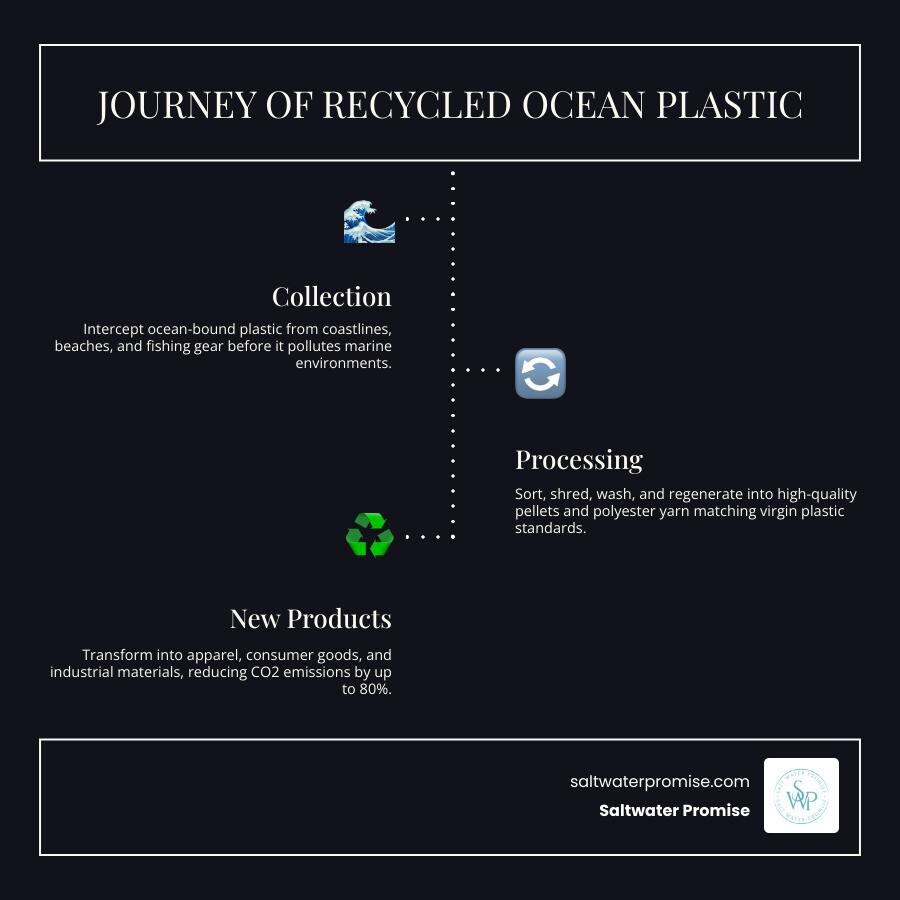
Transforming a dirty plastic bottle found on a beach in Southeast Asia into a soft, durable t-shirt is a feat of modern engineering. We like to think of it as a five-step “glow-up” for trash.
- Collection: Local teams and waste pickers collect plastic from beaches, riverbanks, and uncontrolled landfills. At this stage, support the humans behind the work. Leading organizations ensure that collectors are paid fair wages, turning environmental cleanup into a tool for social empowerment.
- Sorting and Shredding: Not all plastic is created equal. A single bottle might have a PET body, a PP cap, and a PET-G label. These must be separated by resin type and color. Once sorted, the plastic is shredded into small flakes.
- Controlling and Cleaning: The flakes are washed to remove sand, salt, and labels. This is where quality control happens. Advanced labs test the flakes to ensure they meet strict safety standards.
- Target-Oriented Compounding: This is the “secret sauce.” Through a science-based mechanical process, the plastic flakes are melted and turned into pellets. Innovators can adjust the properties of these pellets—making them more flexible or more rigid—depending on what the final product will be.
- Manufacturing: These pellets are then extruded into yarn, molded into shapes, or spun into filaments for 3D printing.
To prove that this journey actually happened, the supply chain must be certified by the Global Recycled Standard. This ensures that the recycled content is tracked from the source to the final garment you wear.
Processing Recycled Ocean Plastic into High-Quality Yarn
When it comes to fashion, the goal is to create a polyester yarn that feels just as good as—if if not better than—virgin polyester. Through polymer regeneration, the molecular chains of the recycled ocean plastic are rebuilt.
The resulting yarn is versatile. It can be woven into heavy-duty canvas for bags or spun into fine, moisture-wicking fabric for ocean-friendly clothing. Because these materials are born from the sea, they are naturally suited for the coastal lifestyle we love at Salt Water Promise.
Ensuring Quality Through Traceability and Certification
In sustainability, transparency is everything. We’ve all heard of “greenwashing,” where a company claims to be eco-friendly without the receipts to back it up. That is why the best recycled ocean plastic suppliers use “material passports” and blockchain technology.
Every batch of plastic gets a digital fingerprint. This allows a brand to show exactly where the plastic was collected and by whom. Furthermore, the materials must comply with international safety regulations like the REACH regulation compliance, which identifies harmful chemical substances, and the RoHS Directive, which restricts hazardous substances in electronic and electrical equipment. When you buy a product with these certifications, you aren’t just helping the ocean; you’re ensuring the product is safe for you and your family.
Innovative Applications: From High-Fashion to Industrial Design
The days of recycled plastic only being used for “earthy” looking park benches are over. Today, recycled ocean plastic is a premium material used by luxury watchmakers, automotive giants, and high-fashion designers.
The versatility comes from the different types of resins recovered. Here is a quick look at how different plastics are being put to work:
| Resin Type | Common Ocean Source | New Application |
|---|---|---|
| PET | Water and soda bottles | Polyester yarn, eco-friendly swimwear |
| HDPE | Milk jugs, shampoo bottles | HDPE boats, plastic lumber, park benches |
| PP | Bottle caps, fishing nets | Automotive instrument panels, reusable mugs |
| Nylon 6 | Ghost nets | High-end textiles, carpets, sunglasses |
Consumer Goods Made from Recycled Ocean Plastic
The list of products you can buy today that were once floating in the sea is growing every day. We are seeing incredible innovation in:
- Watches: Several luxury Swiss watchmakers have swapped virgin plastic for ocean-bound materials in their cases and straps.
- Home Interiors: From designer chairs to acoustic wall panels, the durability of ocean plastic makes it perfect for the home.
- Reusable Goods: Items like the “OceanMug” or sustainable domino sets show that we can turn single-use waste into items that last a lifetime.
- Kids’ Gear: Because we want to protect the future for our little ones, sustainable kids swimwear made from recycled fibers is a fantastic way to start the conversation about conservation early.
Industrial and Automotive Breakthroughs
It’s not just about what’s in your closet; it’s about what’s in your car and your city. Engineers have successfully replaced large virgin plastic components in automobiles with recycled polypropylene. For example, instrument panels in cars are now being made from 100% recycled ocean-bound material without losing any of the safety or quality standards required for the road.
In construction, “plastic lumber” made from HDPE (high-density polyethylene) is replacing wood for park benches, picnic tables, and even boardwalks. Unlike wood, this material doesn’t rot, splinter, or need painting—and it keeps thousands of pounds of plastic out of our marine ecosystems.
Environmental Impact and the Future of the Circular Economy
The shift toward recycled ocean plastic isn’t just a trend; it’s a necessity for our planet’s health. The environmental benefits are measurable and massive.
The most significant impact is the reduction in carbon emissions. Producing upcycled ocean material can generate up to 80% less CO2 than producing virgin plastic from oil. By choosing recycled, we are literally keeping fossil fuels in the ground.
Beyond the carbon footprint, there is the immediate protection of marine life. Every pound of ghost gear removed is a potential life saved. Every bottle collected on a beach is one less piece of microplastic that could end up in the food chain.
Scaling Global Cleanup and Recycling Efforts
To make a real dent in the 8 million tonnes of plastic that enter the ocean annually, we need scale. This is happening through global partnerships. For instance, some initiatives have already recycled the equivalent of over 20 million PET bottles.
This scale is built on two pillars:
- Fair Wages: By treating plastic as a valuable resource, we provide an income for 4,500+ cleanup team members globally. In many coastal regions, this provides a stable livelihood while cleaning up the local environment.
- Infrastructure: We aren’t just picking up trash; we are building waste management systems where none existed, ensuring that the “tap” is turned off at the source.
The Role of Transparency in Sustainable Supply Chains
We believe that the “Material Revolution” depends on trust. Consumers want to know that their purchase actually made a difference. This is why beach clean-up initiatives and digital proof-of-process are so important.
When a brand can show you the exact coordinates where the plastic for your t-shirt was collected, it changes your relationship with that garment. It’s no longer just “stuff”; it’s a symbol of change. This transparency is what will drive the circular economy forward, moving us away from a “take-make-waste” model and toward a world where we value every piece of material we create.
Frequently Asked Questions about Recycled Ocean Plastic
Is recycled ocean plastic as durable as virgin plastic?
Yes! Thanks to advanced mechanical recycling and “target-oriented compounding,” the molecular chains of the plastic are regenerated. This means the resulting pellets can match the quality, strength, and durability of virgin plastic. It can be used for high-performance applications like automotive parts and luxury goods without compromise.
What is the difference between “ocean-bound” and “ocean” plastic?
“Ocean-bound” plastic is waste collected within 50km of a coastline in areas where it is likely to end up in the sea. “Ocean” plastic (or ocean-recovered) is material that has already entered the marine environment and is retrieved from the water or deep-sea floor. Ocean-bound plastic is often easier to recycle because it has suffered less degradation from salt and sun.
How does recycling plastic help reduce carbon emissions?
Creating plastic from recycled materials requires significantly less energy than creating “virgin” plastic from raw petroleum. For example, some upcycling processes produce up to 80% fewer CO2 emissions than traditional plastic manufacturing. Plus, it keeps plastic out of incinerators, which also reduces air pollution.
Conclusion
At Salt Water Promise, our mission is to turn everyday moments into meaningful action. We aren’t just a beach brand; we are a community of people who love the sun-washed mornings and salty air enough to fight for them.
Recycled ocean plastic is a powerful tool in that fight. It allows us to take the “design failure” of plastic waste and turn it into a symbol of stewardship. Whether it’s through the clothes we wear or the initiatives we support, every choice to move away from virgin plastic is a promise kept to our oceans.
We invite you to join us in this journey. By choosing products made with purpose and supporting clean-up efforts, we can ensure that our beaches remain the beautiful, thriving places they were meant to be.
Wear the wave. Be the change.


